1927
Location

Race Details
1927 Schneider Cup Course
Venue and course shape. The tenth Schneider Trophy race was held off the Lido di Venezia on 26 September 1927. The starting and finishing line was in front of the Hotel Excelsior on the Adriatic side of the Lido. Contemporary news accounts describe a triangular, left-handed course; later histories likewise describe a triangular circuit. It lay outside the lagoon, along the Lido and toward the Chioggia/Sottomarina end of the Venetian coast.
Route and turning areas. The start/finish at the Excelsior was followed by high-speed legs running down the Lido coast toward the southern turn near Malamocco and Sottomarina/Chioggia, then north on the seaward side toward the San Nicolò entrance before returning to the Excelsior. A local account lists the order as Excelsior–Malamocco breakwater–Sottomarina–San Nicolò breakwater–Excelsior, while other accounts simplify the route to a triangle. The map therefore shows a simplified triangular reconstruction and uses regional labels rather than claiming exact buoy coordinates or a surveyed path.
Laps and distance. The most commonly tabulated course is seven laps of 50 km (about 31 statute miles), totaling 350 km (about 217.5 statute miles). A later visual reconstruction describes seven laps of approximately 47 km, or about 320 km in total. The contemporary reporting and race-result tables support the seven-lap format, but sources are not fully consistent on the lap length and the total distance; the 50 km figure is used on the map because it is the prevailing race-table figure, not because the modern map resolves the discrepancy.
Direction and rules. A contemporary cable report described the course as left-handed. The Schneider rules required a seaplane course over water and a minimum total distance of 150 nautical miles. Entrants also had to pass seaworthiness trials; accounts of the rules describe floating at anchor for six hours and taxiing on the water before the race. Aircraft had to touch the water at two specified points during the contest, a difficult requirement at racing speed. The exact 1927 buoy placements and each leg's measured length were not located in a dependable course chart.
Weather and date. The race was scheduled for 25 September, but a gale and rough sea forced postponement. It was flown the following day, 26 September. Thus 25 September in some event schedules refers to the planned date, not the date of the completed race.
Sources: AirRace, Schneider Trophy results and 50 km / seven-lap listing; U.S. Air Service Newsletter (1929), race narrative and results; Greymouth Evening Star, 26 September 1927, contemporary course description and postponement reports; Luxe à Venise, local history with named course landmarks; Patrick Chovanec, reconstruction describing an approximately 47 km lap and landmarks.

The course length and map’s red line is a visual reconstruction, not a claim to the exact historical buoy layout.
The Winner
(875 hp)
281.66 mph


Click the Icons above to be redirected to Wikipedia Information on that subject
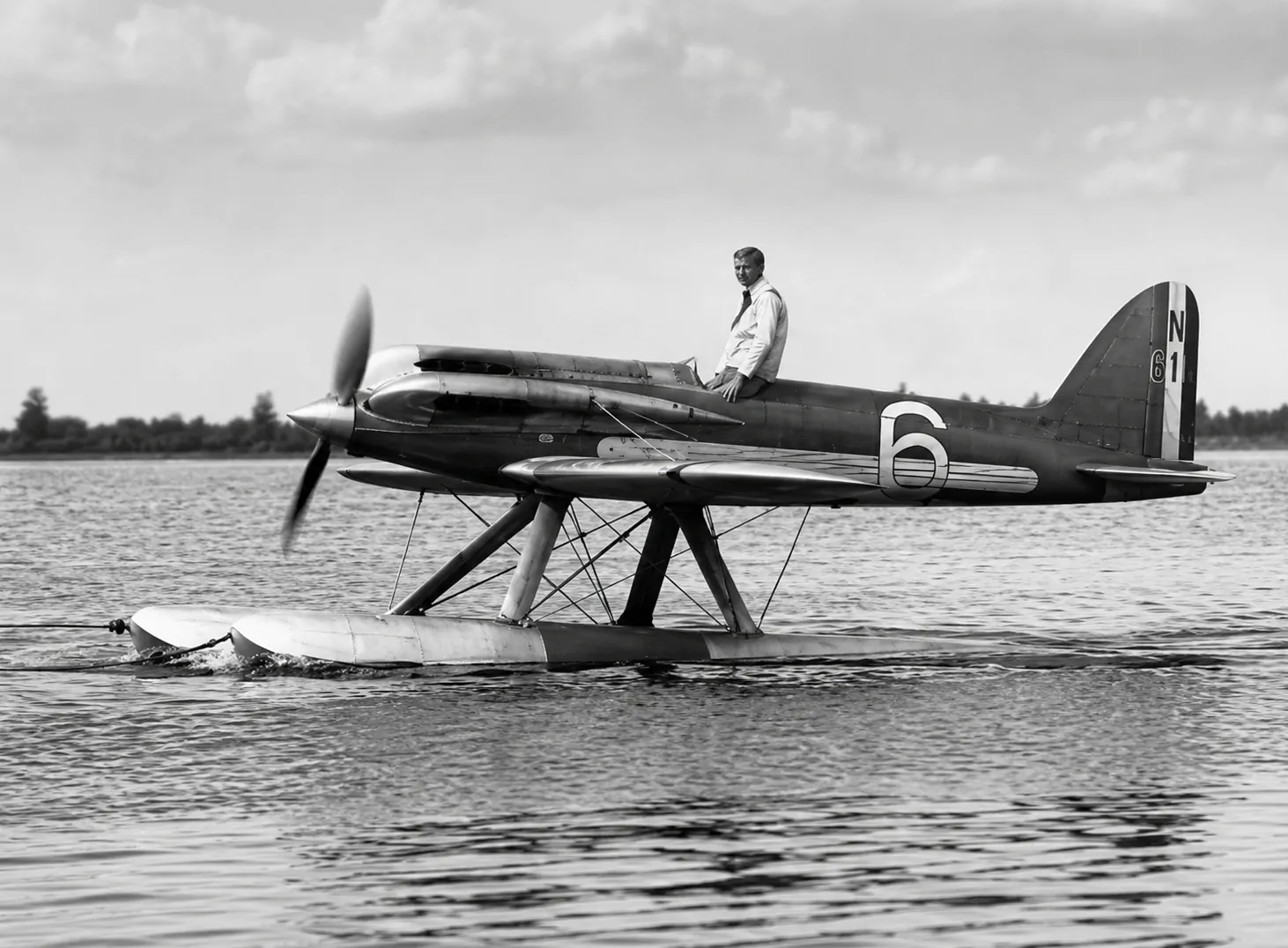
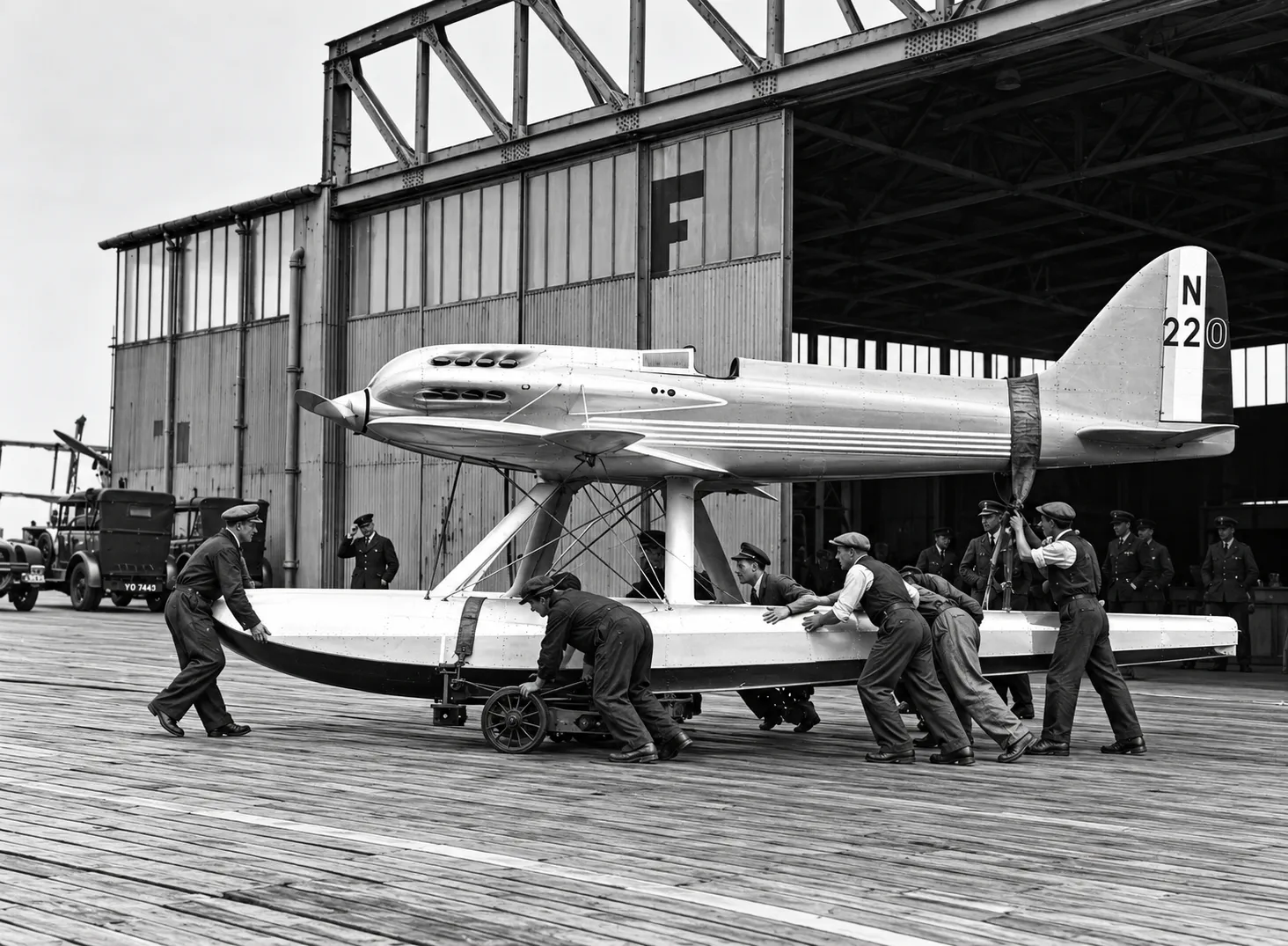
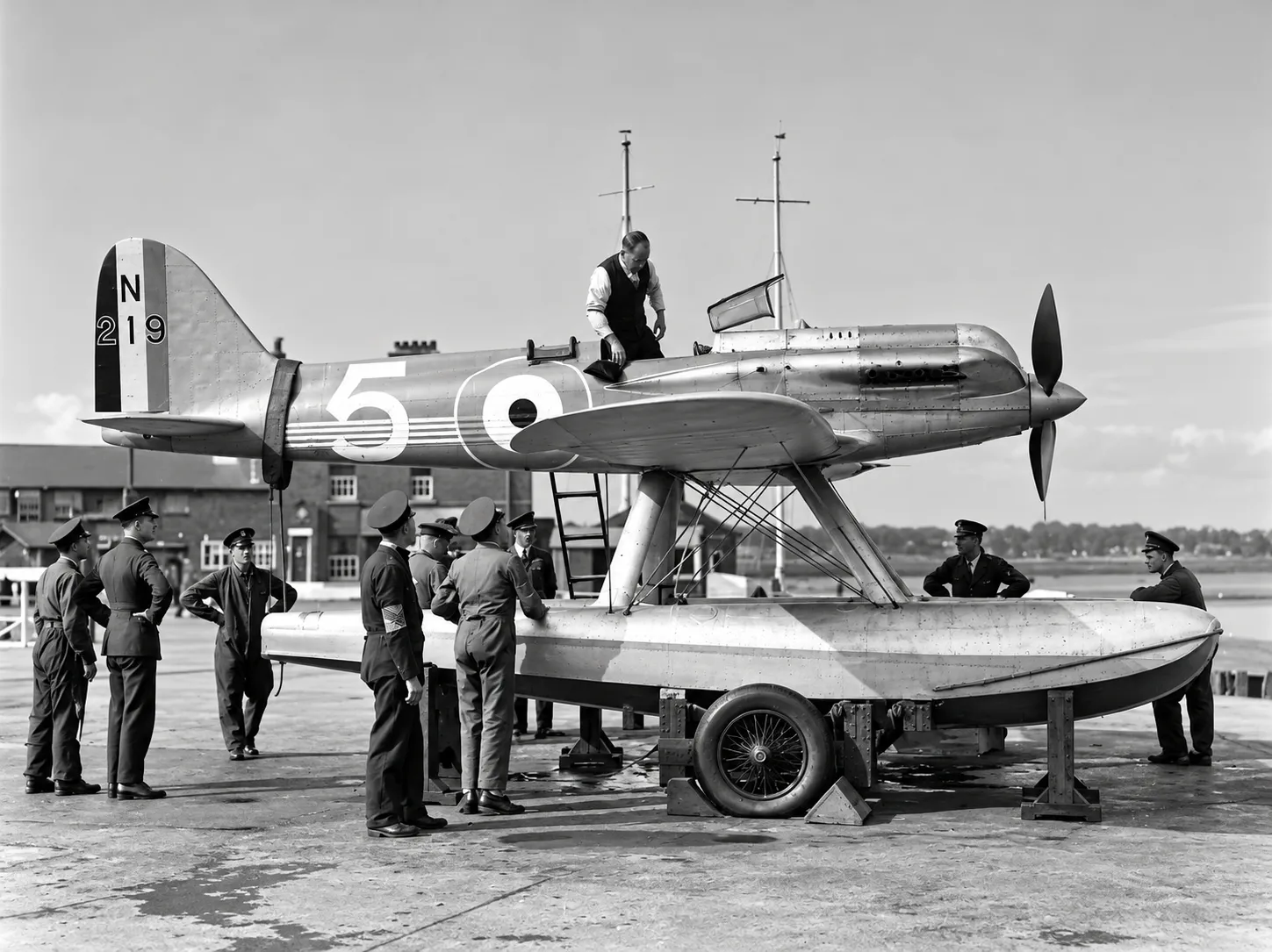
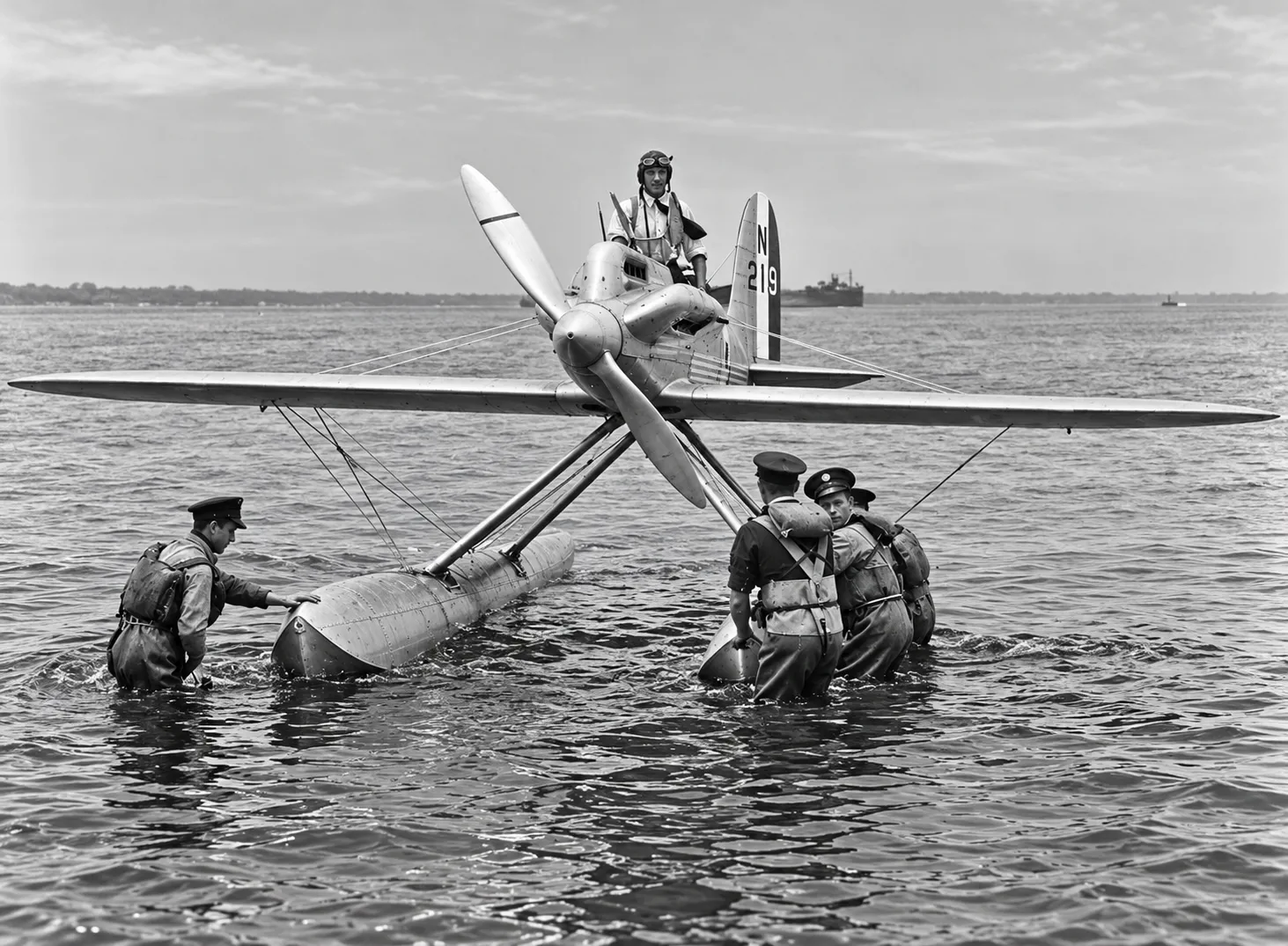
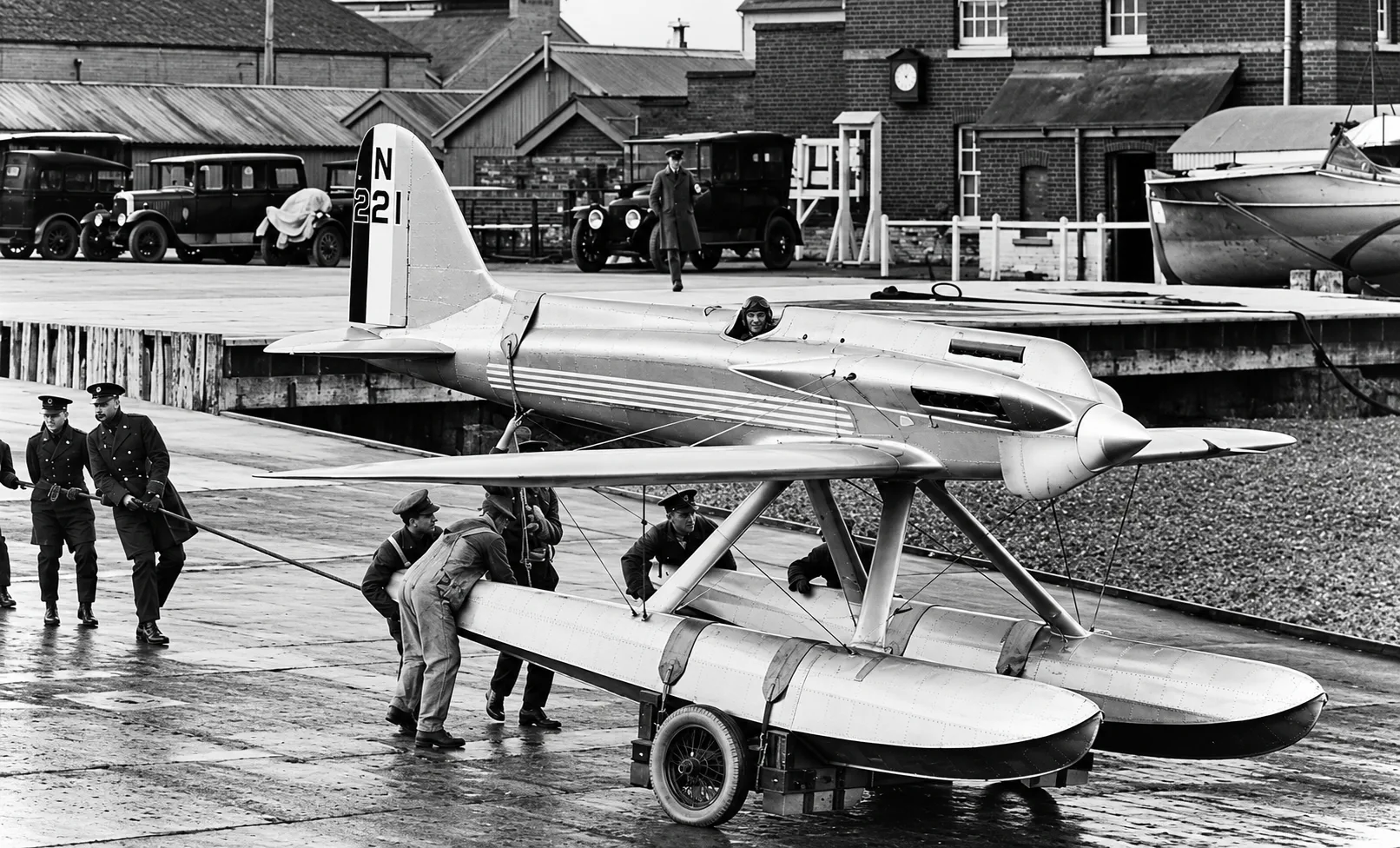
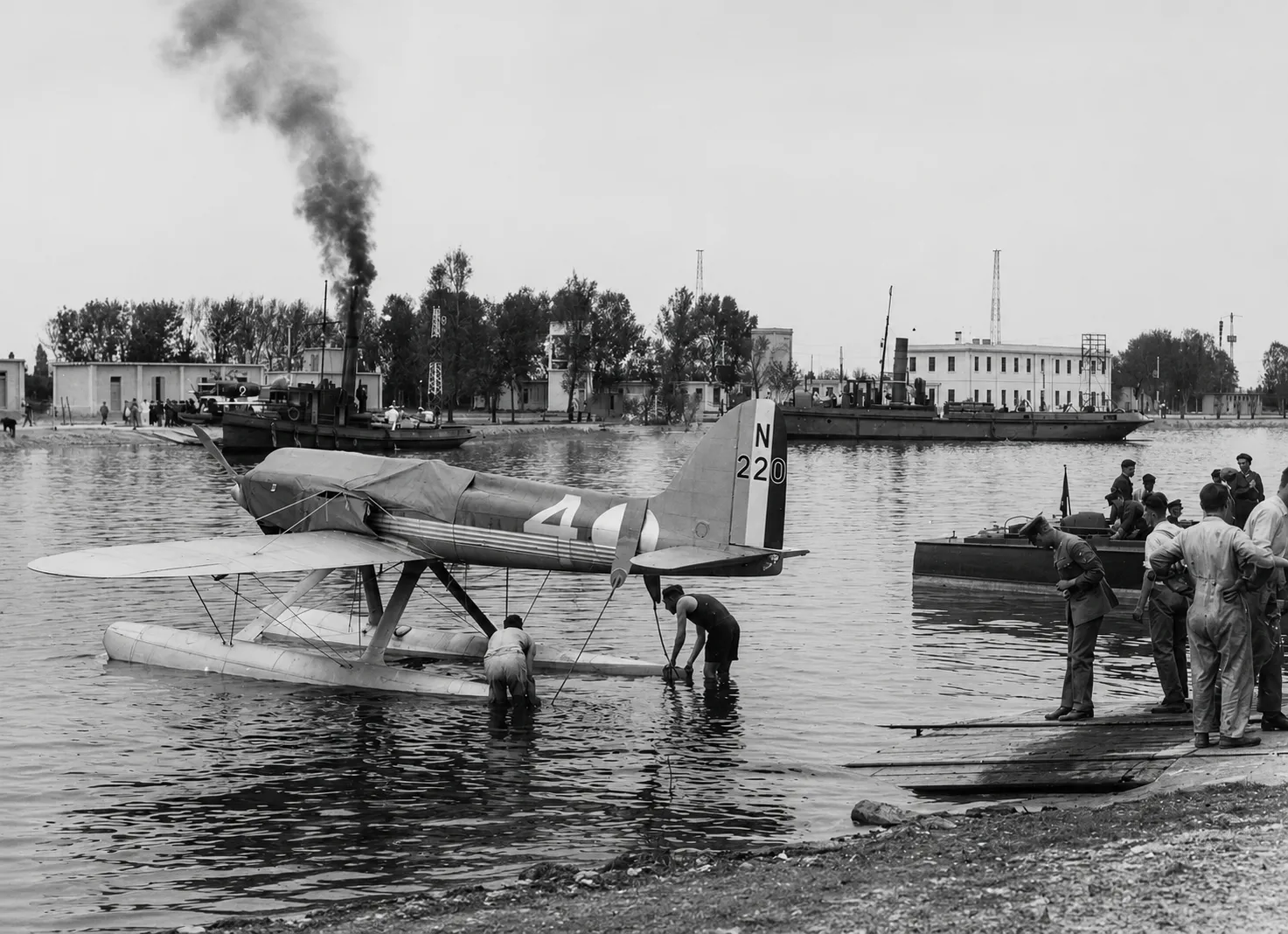
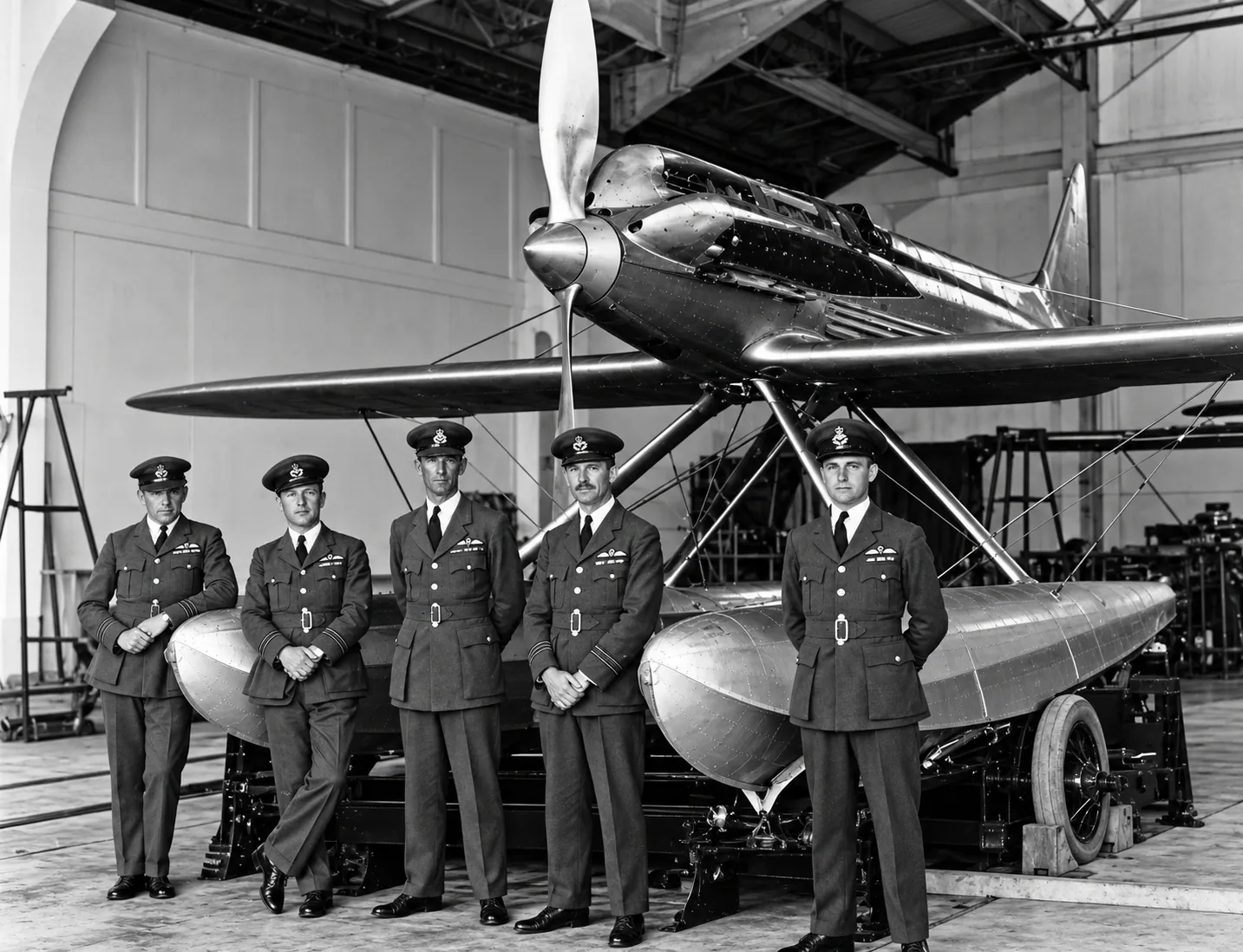
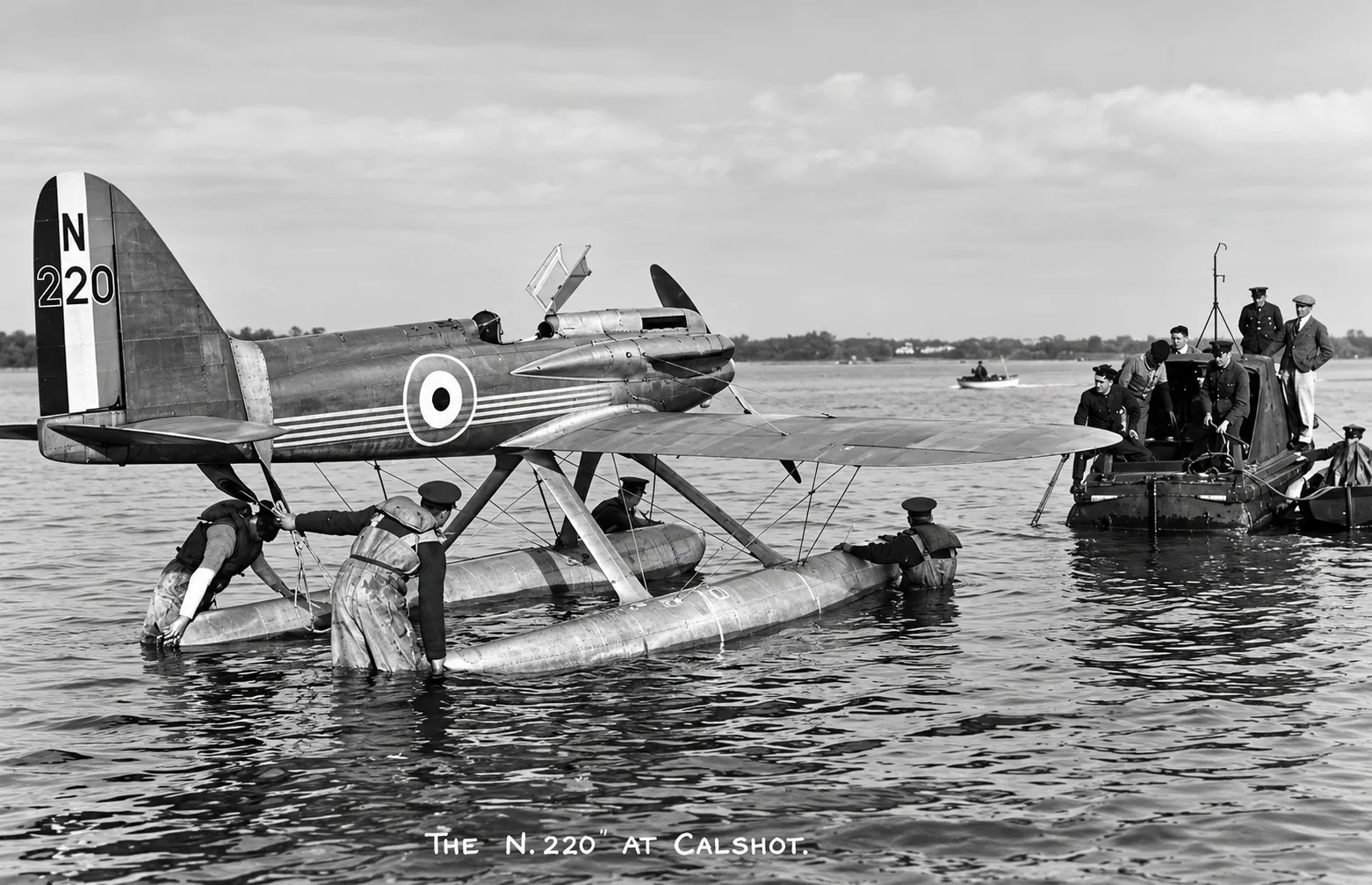
The Supermarine S.5 was a 1920s British single-engined single-seat racing seaplane built by Supermarine. Designed specifically for the Schneider Trophy competition, the S.5 was the progenitor of a line of racing aircraft that ultimately led to the iconic Supermarine Spitfire fighter of the Second World War
The S.5 was designed by Reginald Mitchell after the loss of the S.4 before it ever raced. It featured extensive changes from the S.4, possessing numerous unconventional features and making greater use of metal; many of these decisions were made to optimise its racing performance. Due to the short development window, a wooden wing was used rather than an all-metal one. In particular, it possessed a relatively low level of drag for the era
On 7 June 1927, the first S.5 performed its maiden flight; a total of three aircraft were built. Two S.5s came in 1st and 2nd places at the 1927 Schneider Trophy contest; the type would also participate in the event during subsequent years. On 12 March 1928, one S.5 fatally crashed during an attempt on the world air speed record, killing the pilot Flight Lieutenant Samuel Kinkead..
















- «
- 1
- 2
- 3
- »
Race and setting
The tenth Schneider Trophy contest was held off the Lido at Venice on 26 September 1927. It had been scheduled for the previous day, but strong winds and rough seas made take-off and landing unsafe and forced a postponement. Britain returned with a state-supported high-speed team after missing the 1926 contest; Italy defended the Trophy. The United States did not start: Al Williams's Kirkham-Williams entry did not arrive in time and was cancelled. France also had no competing team.
The race was run over seven laps. Six aircraft started: three British and three Italian. Only Sidney Webster and Oswald Worsley completed the full course. The final result put two British Supermarine S.5 monoplanes first and second; every other starter retired.
Pilots and aircraft
Great Britain: Flight Lieutenant Sidney N. Webster flew Supermarine S.5 N220 (race number 4); Flight Lieutenant Oswald E. Worsley flew S.5 N219 (number 6); and Flight Lieutenant Samuel M. Kinkead flew the Gloster IVB N222 (number 1). The S.5, designed by R. J. Mitchell, was a single-seat twin-float monoplane powered by a Napier Lion engine. Webster's aircraft had a geared propeller; Worsley's was direct drive, according to the contemporary U.S. Air Service account. The planned Short Crusader had been destroyed during testing and did not start. The Gloster IVA N224 was listed as a reserve, not a starter.
Italy: Major Mario de Bernardi flew Macchi M.52 MM80 (number 2); Captain Arturo Ferrarin flew M.52 MM82 (number 7); and Captain Federico Guazzetti, also rendered “Guzzetti” or “Guazetti” in English-language sources, flew M.52 MM81 (number 5). These were streamlined twin-float monoplanes with Fiat AS.3 engines. One official retrospective calls all three pilots' aircraft Macchi-Fiat M.52s. Historical sources differ in spelling Guazzetti's surname, so both forms appear in the literature.
What happened in the race
Webster won in 46 minutes 20.3 seconds at a recorded average of 281.656 mph (about 453.28 km/h), then a Schneider race record. Worsley finished second in 47 minutes 46.7 seconds, at about 272.91 mph (438.9 km/h). The U.S. Air Service retrospective gives Worsley's average as 272.96 mph, a small reporting difference.
Kinkead's Gloster IVB retired during its sixth lap after engine/propeller difficulties. The AirRace table gives a best recorded pace of 272.53 mph; the official retrospective reports 289 mph on his third lap, while contemporary newspaper reports print still other lap figures. His partial-race speed should therefore be treated as approximate. Guazzetti reached the final lap before engine failure. De Bernardi and Ferrarin both retired early with engine trouble, but the reported lap differs: the U.S. Air Service account places both after the first lap, while the detailed result table records Ferrarin out on lap one and de Bernardi out on lap two.
Recorded result:
| Place / status | Pilot | Aircraft | Time / reported average |
|---|---|---|---|
| 1 | Sidney N. Webster (Great Britain) | Supermarine S.5 N220, no. 4 | 46:20.3; 281.656 mph |
| 2 | Oswald E. Worsley (Great Britain) | Supermarine S.5 N219, no. 6 | 47:46.7; 272.91 mph (272.96 in one official retrospective) |
| 3, retired lap 7 | Federico Guazzetti / Guzzetti (Italy) | Macchi M.52 MM81, no. 5 | About 257.78 mph before retirement (result-table figure) |
| 4, retired lap 6 | Samuel M. Kinkead (Great Britain) | Gloster IVB N222, no. 1 | Lap-speed reports conflict; approx. 272.53 mph listed |
| 5, retired lap 2 | Mario de Bernardi (Italy) | Macchi M.52 MM80, no. 2 | About 263.1 mph before retirement (result-table figure) |
| 6, retired lap 1 | Arturo Ferrarin (Italy) | Macchi M.52 MM82, no. 7 | Engine trouble reported |
Winner and significance
Webster's victory returned the Schneider Trophy to Britain. Worsley's second place made it a British one-two, and the result began the three consecutive British victories—1927, 1929, and 1931—that allowed Britain to keep the Trophy permanently. The S.5's success demonstrated the value of carefully developed airframes and engines as well as raw power; its design lineage helped inform Mitchell's later work, though the S.5 itself was not a direct operational predecessor to the Spitfire.
Historical uncertainties. The race date is firmly reported as 26 September, though the race was originally scheduled for September 25. Seven laps are consistent across result summaries, but sources conflict between a 50 km lap (350 km total) and a later approximately 47 km reconstruction (roughly 320–329 km). Lap-retirement accounting differs for de Bernardi, and some per-lap speeds reported for Kinkead vary substantially. Guazzetti's surname has variant spellings in sources. The map is explicitly an approximate reconstruction, not a surveyed buoy chart.
Sources: AirRace, detailed Schneider Trophy result table; U.S. Air Service Newsletter (1929), competitor narrative and results; RAF Museum, 1927 timeline; RAF Museum collection, Sidney Webster and the 1927 winning team; Otago Daily Times, 28 September 1927, contemporary report; Italian Air Force, Macchi M.52 history and technical data; Smithsonian Air & Space Magazine, Schneider Trophy history.