1925
Location
Race Details
1925 Schneider Cup Course
Venue and route. The eighth Schneider Trophy contest was flown on the Chesapeake Bay near Baltimore, Maryland, on 26 October 1925. The Smithsonian's National Air and Space Museum describes the course as a triangle stretching from Bay Shore Park to Gibson Island to the south, then across the Bay to Huntingfield Point and back to Bay Shore Park. Bay Shore Park hosted the judges' stand and start/finish area. The three named places establish the broad route, but they do not define exact historic buoy coordinates.
Legs and turning points. The course was a closed triangular circuit of 50 kilometres (about 31 statute miles) per lap. Its legs connected Bay Shore Park, Gibson Island, and Huntingfield Point. The surviving Smithsonian course description does not supply verified individual leg lengths, exact start-line coordinates, or precise positions for the turning buoys/pylons. This map plots the named landmarks approximately and should be read as a geographic reconstruction, not a historic survey. A later account describes one corner marker as a lighthouse and the other two as pylons on barges; the sources do not securely match each marker to an exact plotted coordinate.
Start, laps, and total distance. The official race-planning account said the course was exactly 50 km around, with seven laps and a finish at the judges' stand. Multiplying those figures gives 350 km (about 217.5 statute miles, or 189 nautical miles). A 1929 U.S. Air Service retrospective gives 188.86 sea miles, a near-equivalent total; small differences reflect rounding and measurement conventions. The official souvenir program was prepared for 24 October, but high winds postponed the actual race to 26 October.
How it was flown. It was a timed seaplane race over water, flown as repeated laps of the triangle. Contemporary pre-race information says alternate starting lines were provided so aircraft could take off into the wind and have room before turning around a pylon. The race ended at the judges' stand after seven circuits. The accessible descriptions identify the named turning areas but do not state a verified clockwise/counter-clockwise direction, exact buoy spacing, or a precise mandatory line through each corner; those details are not inferred here.
Course rules and uncertainty. General Schneider Trophy rules required the contest to be an international seaplane race flown over water, with a minimum distance of 150 nautical miles; this 350 km course exceeded that minimum. The planned triangular course, 50 km lap, and seven-lap requirement are well supported. The precise buoy/pylon placements and individual leg lengths remain uncertain. The map uses the 50 km and seven-lap figures but does not claim to recover the original survey or marker coordinates.
Sources: Smithsonian National Air and Space Museum, “The triangular Schneider Race Course”; U.S. Air Service Newsletter (1925), pre-race course description; U.S. Air Service Newsletter (1929), retrospective distances and race account; U.S. Naval Institute, “The Curtiss Racers”; Smithsonian Air & Space Magazine, “The Schneider Trophy”.
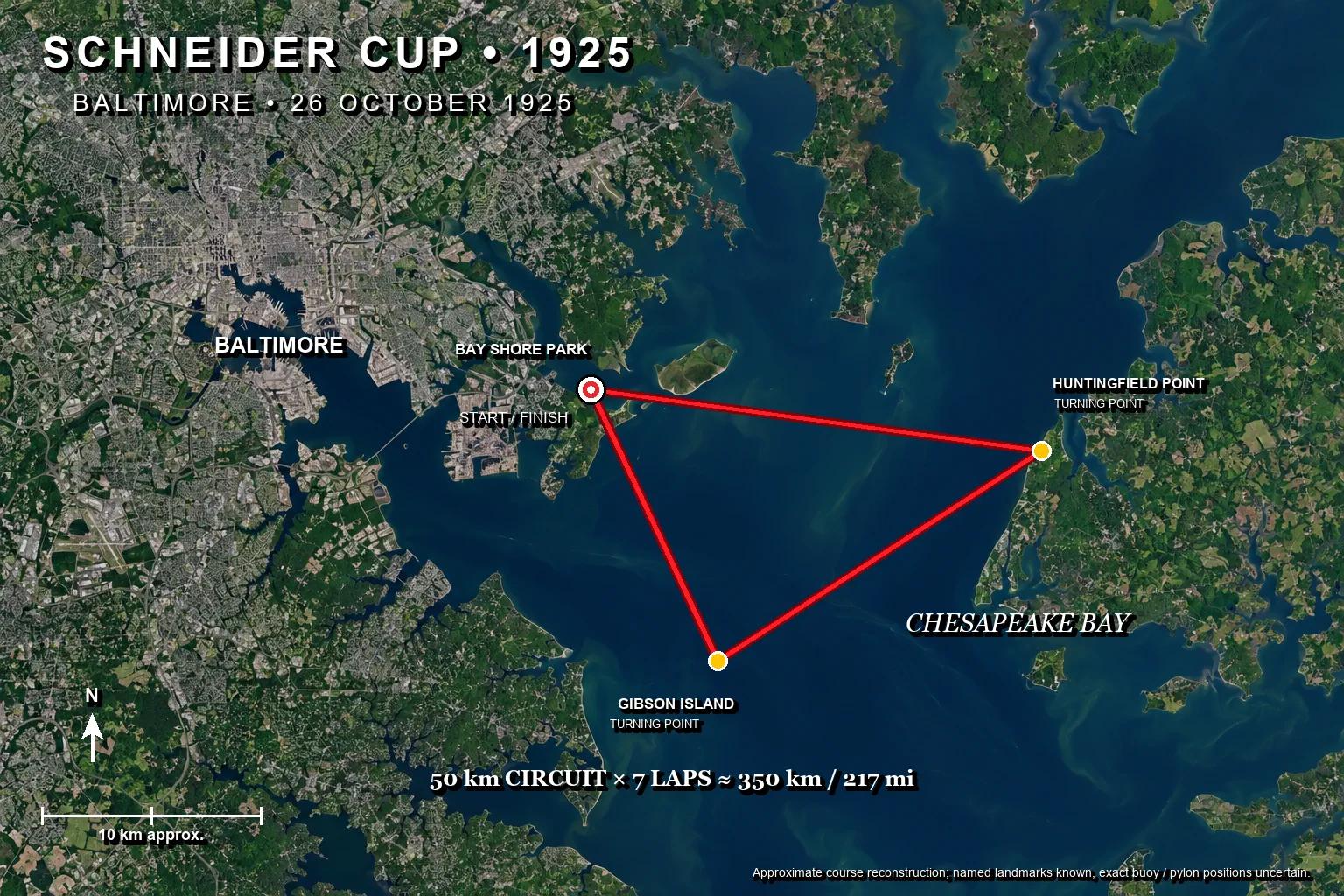
The course length and map’s red line is a visual reconstruction, not a claim to the exact historical buoy layout.
The Winner
(565 hp)
232.56 mph

Click the Icons above to be redirected to Wikipedia Information on that subject
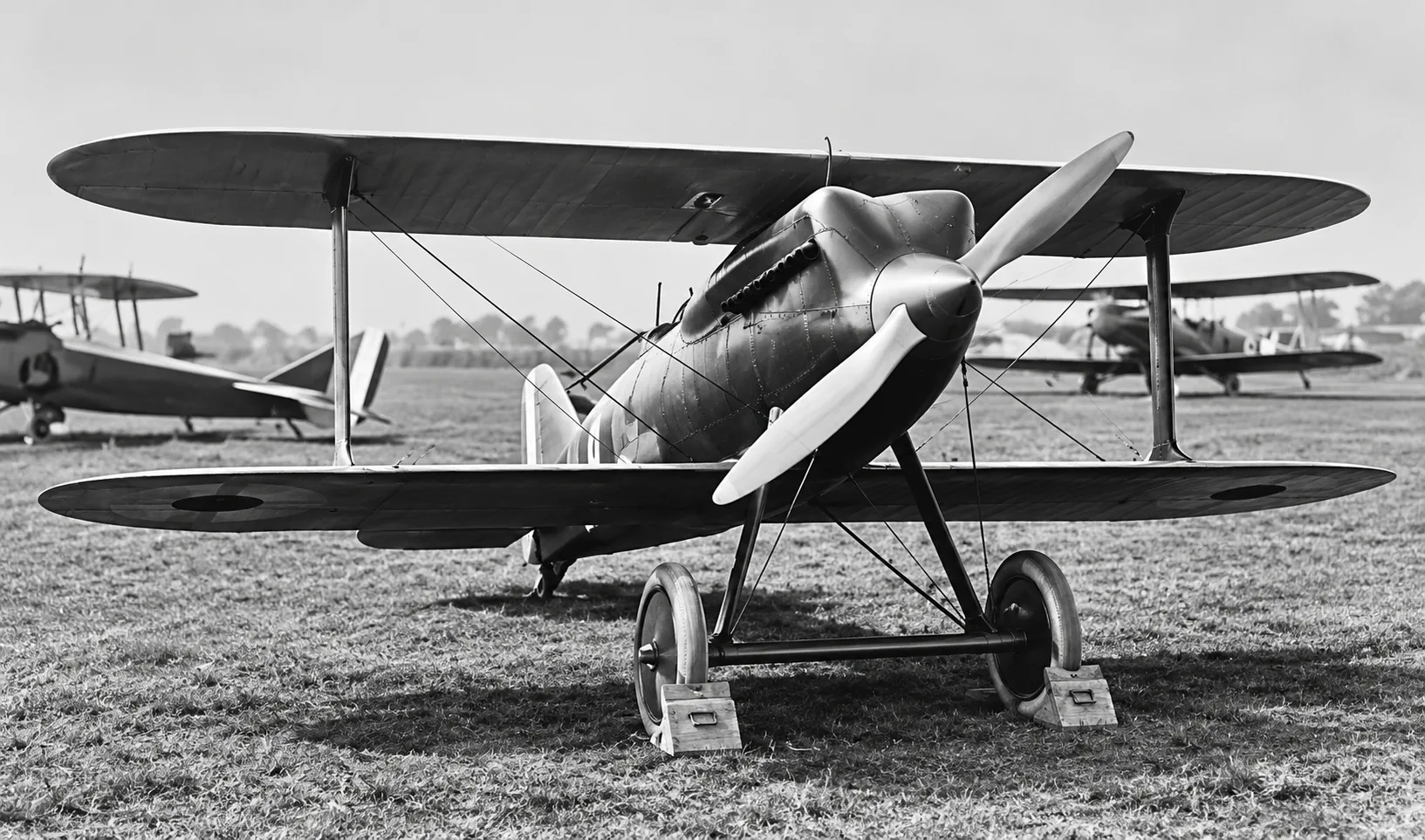
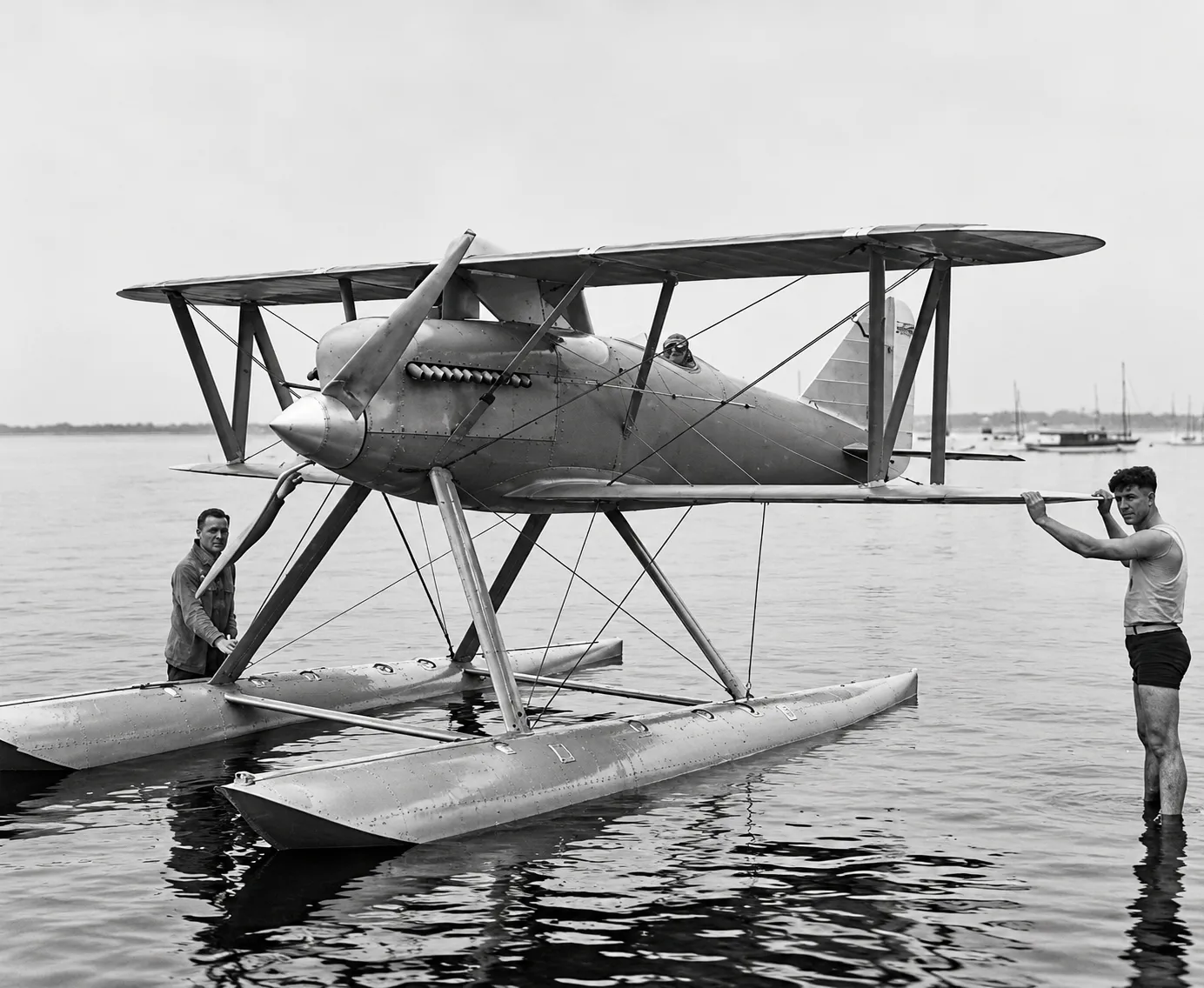
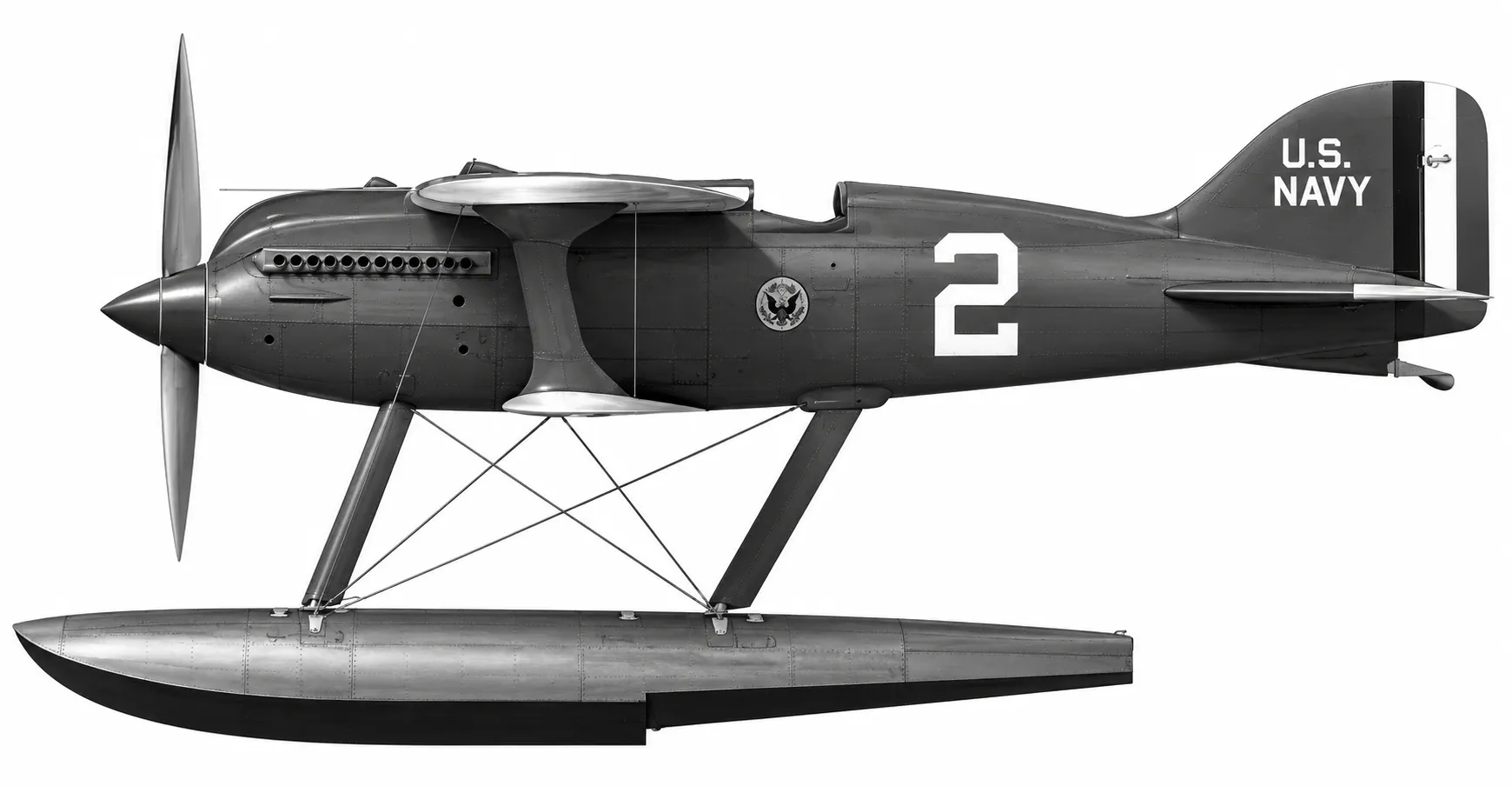
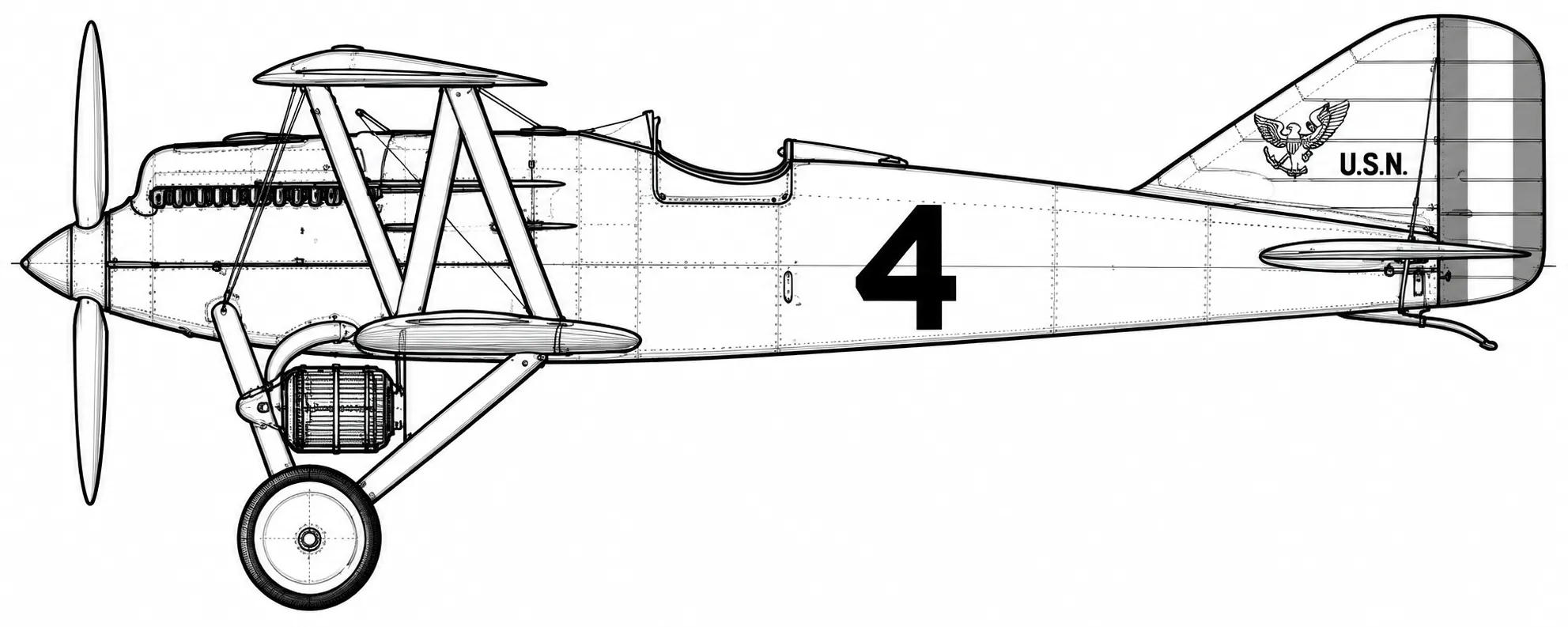
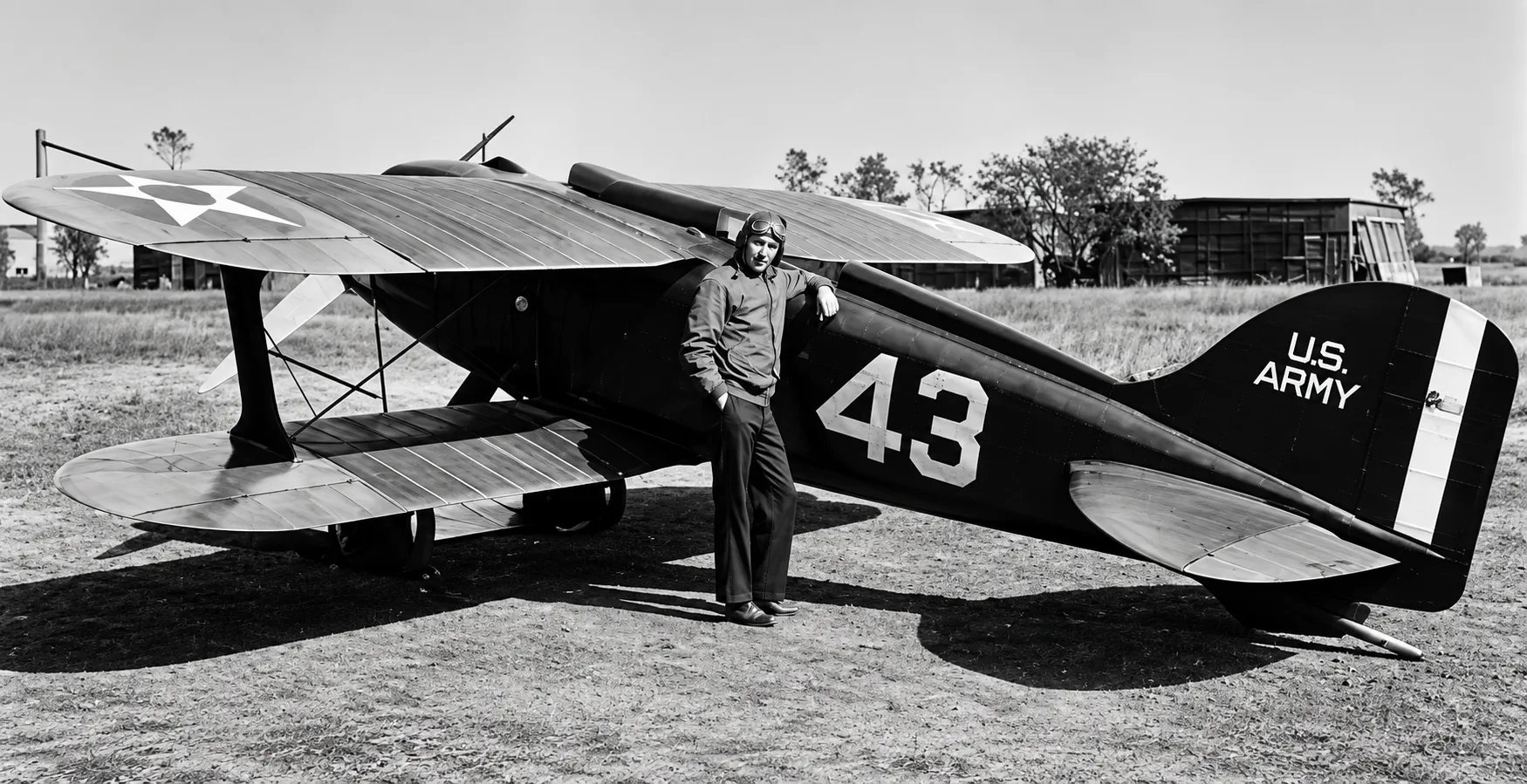
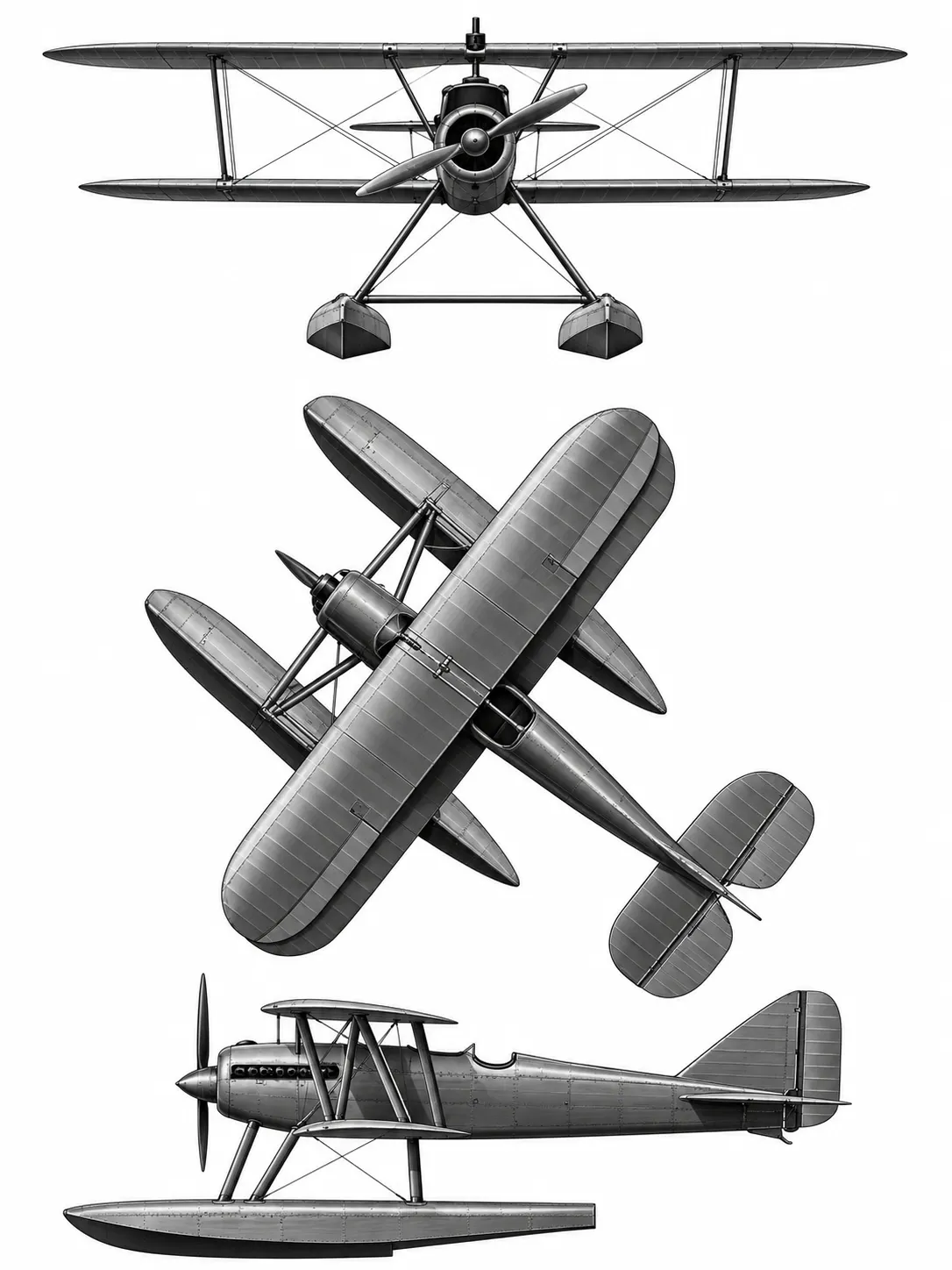
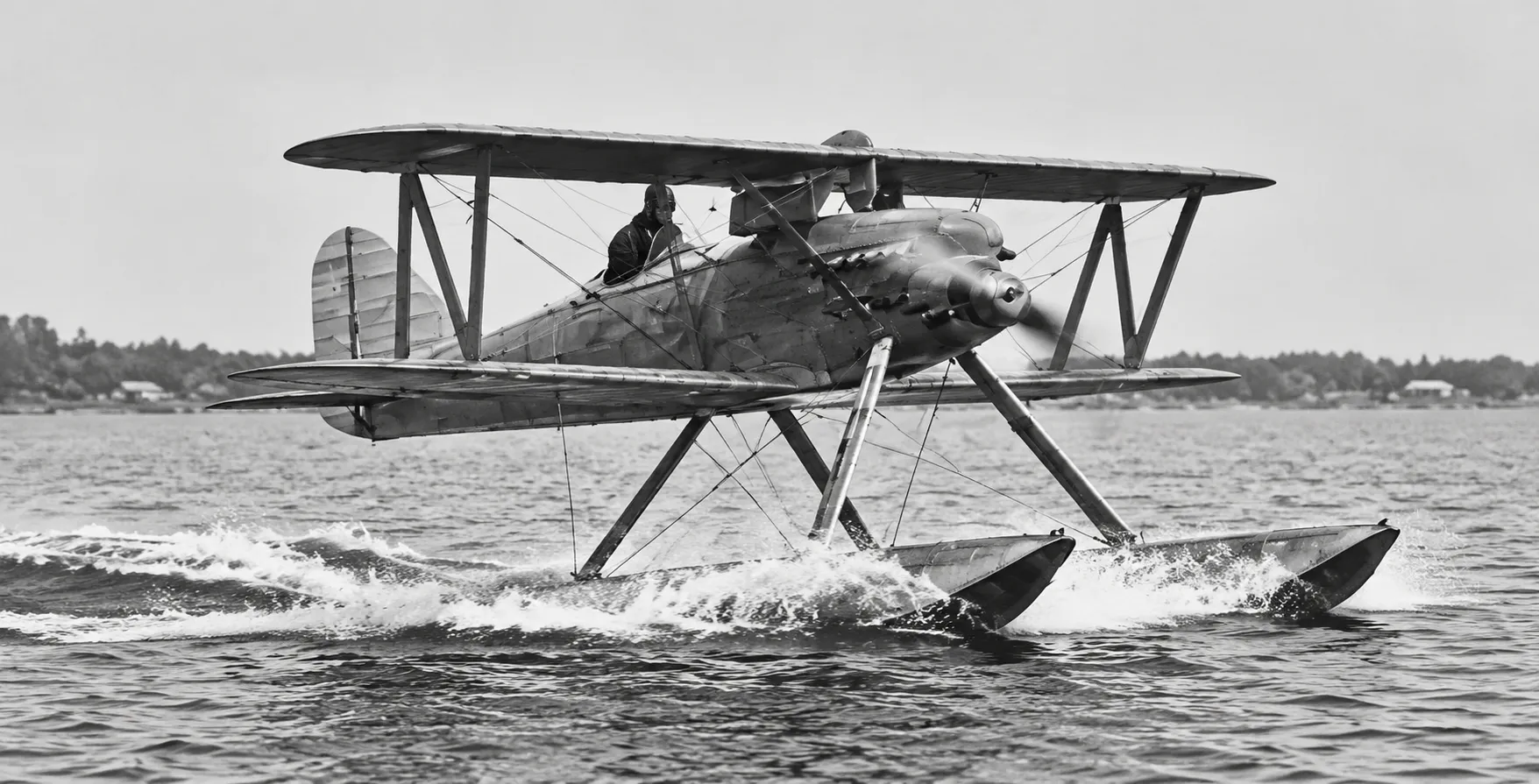
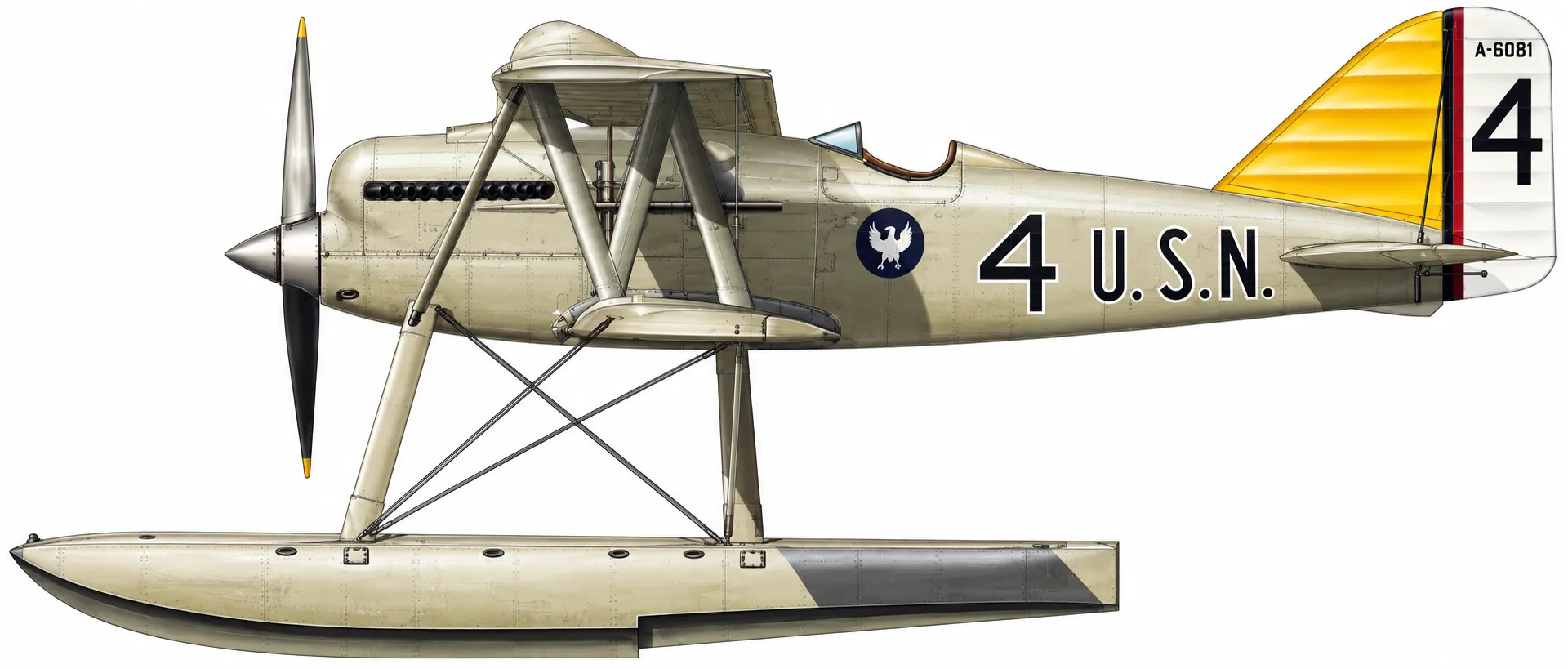
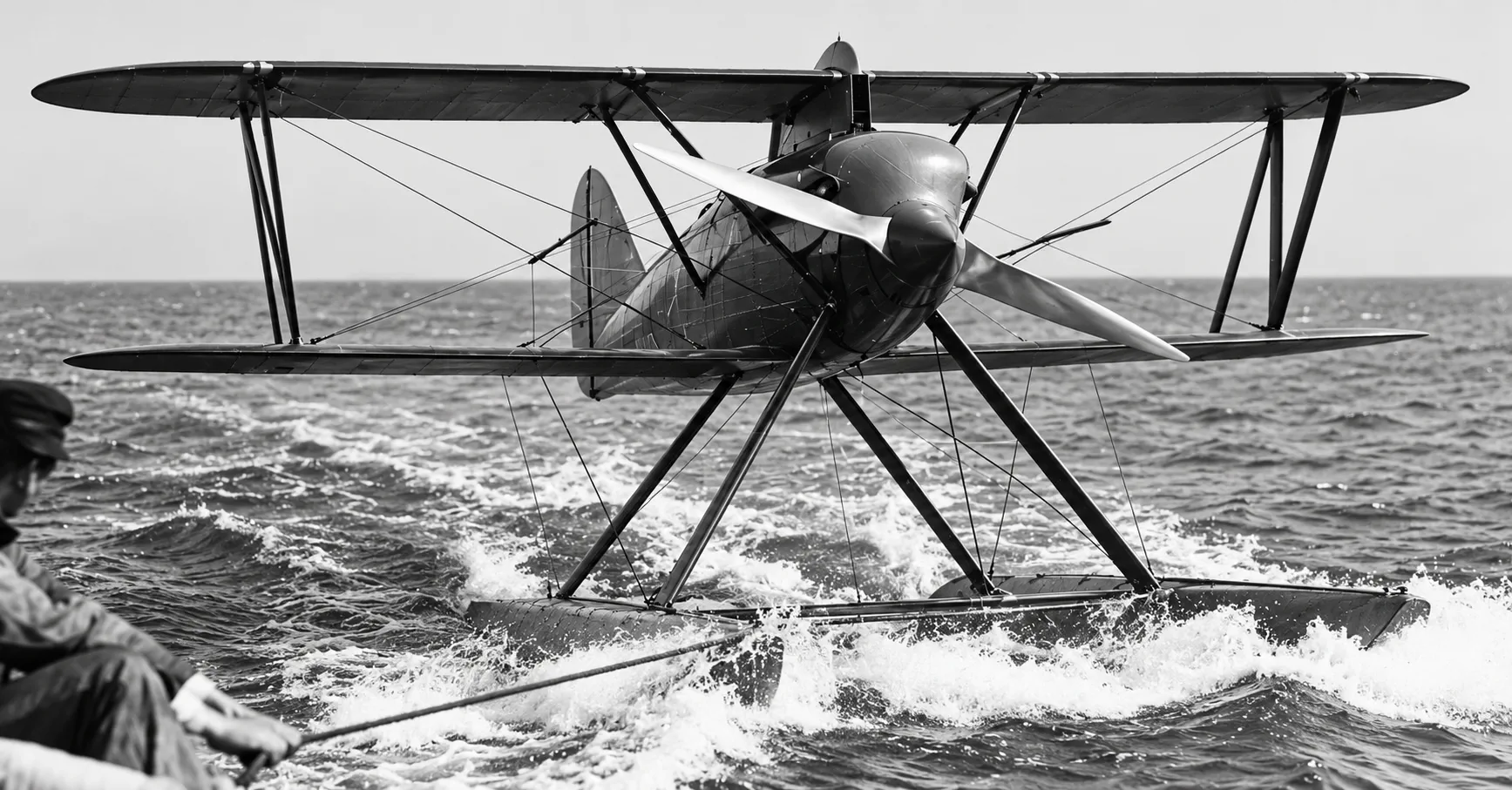
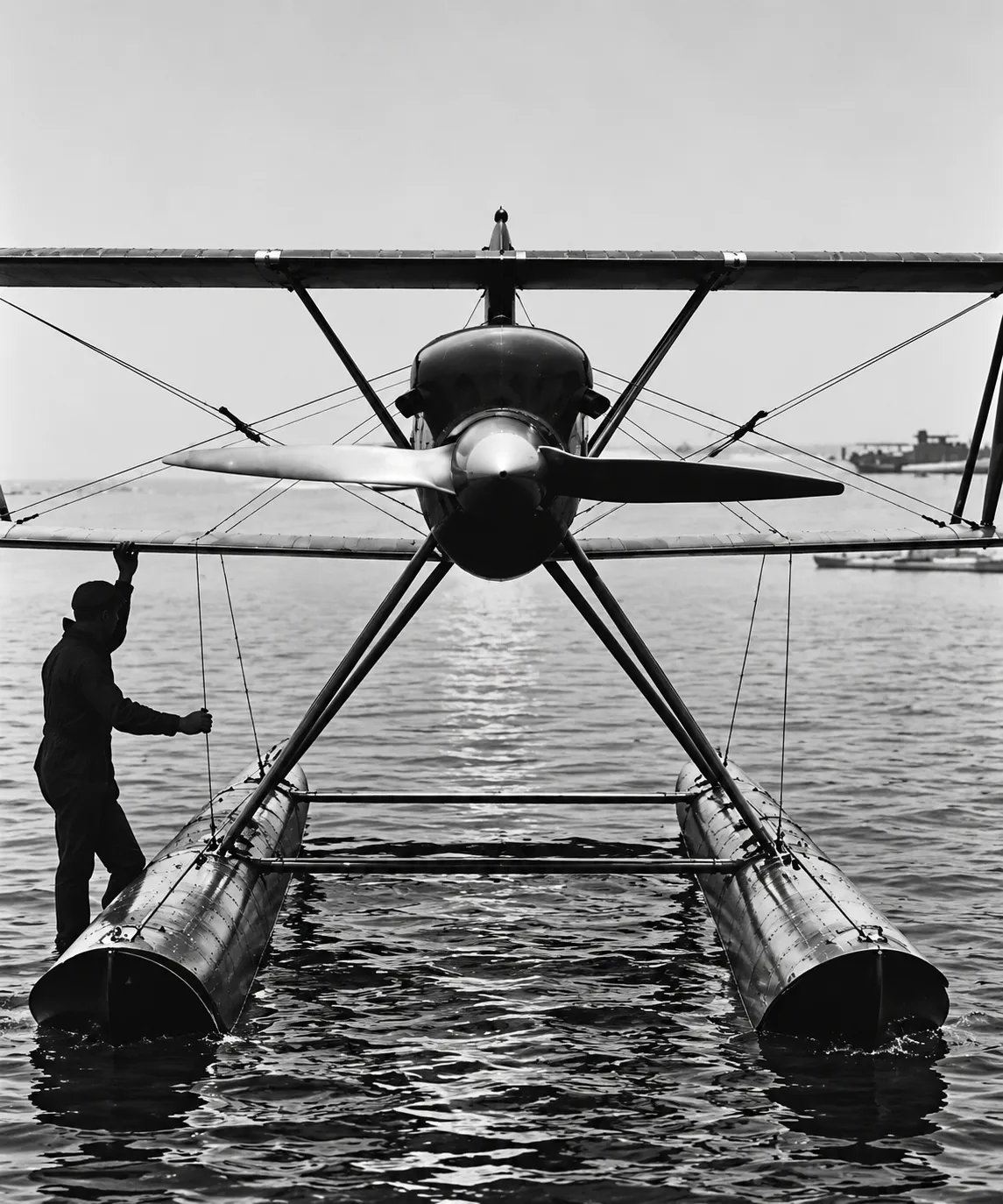
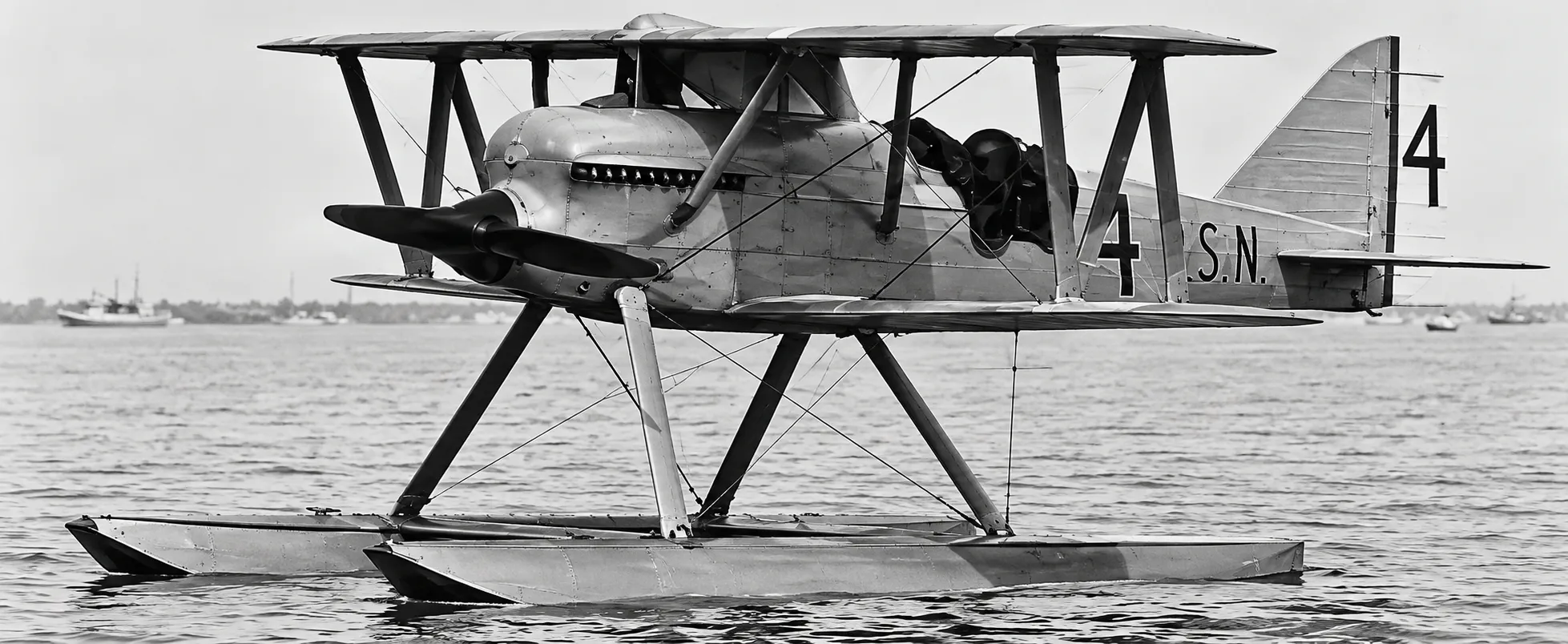
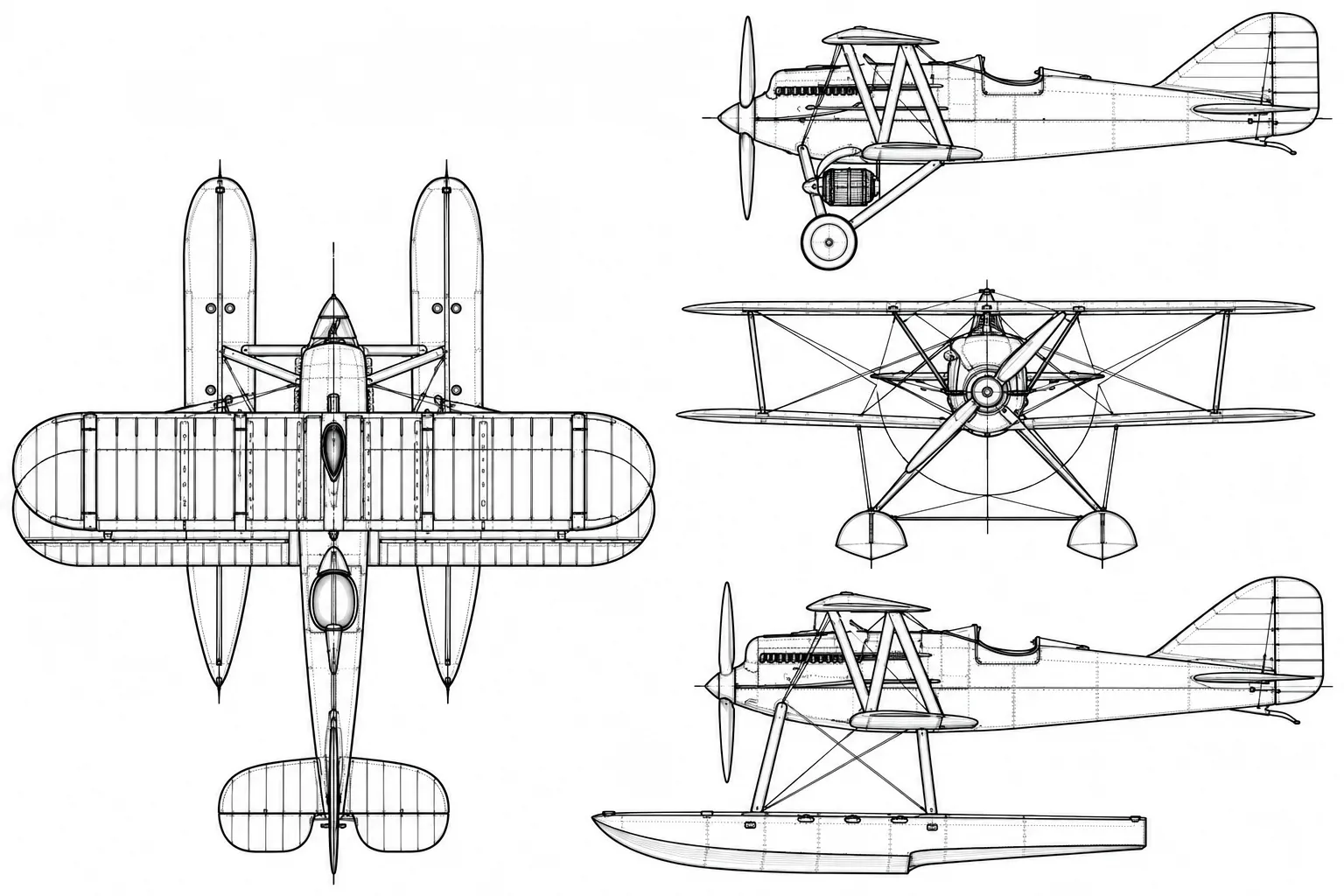
The Curtiss CR was a racing aircraft designed for the United States Navy in 1921 by Curtiss. It was a conventional single-seater biplane with a monocoque fuselage and staggered single-bay wings of equal span braced with N-struts.
Two essentially similar landplane versions were built as the CR-1 and CR-2, which were both eventually converted to seaplanes as the CR-3 in 1923 and CR-4 in 1924. In 1923, the CR-2s were fitted with floats for the Schneider Trophy race and redesignated CR-3. The aircraft took first and second place








Race overview
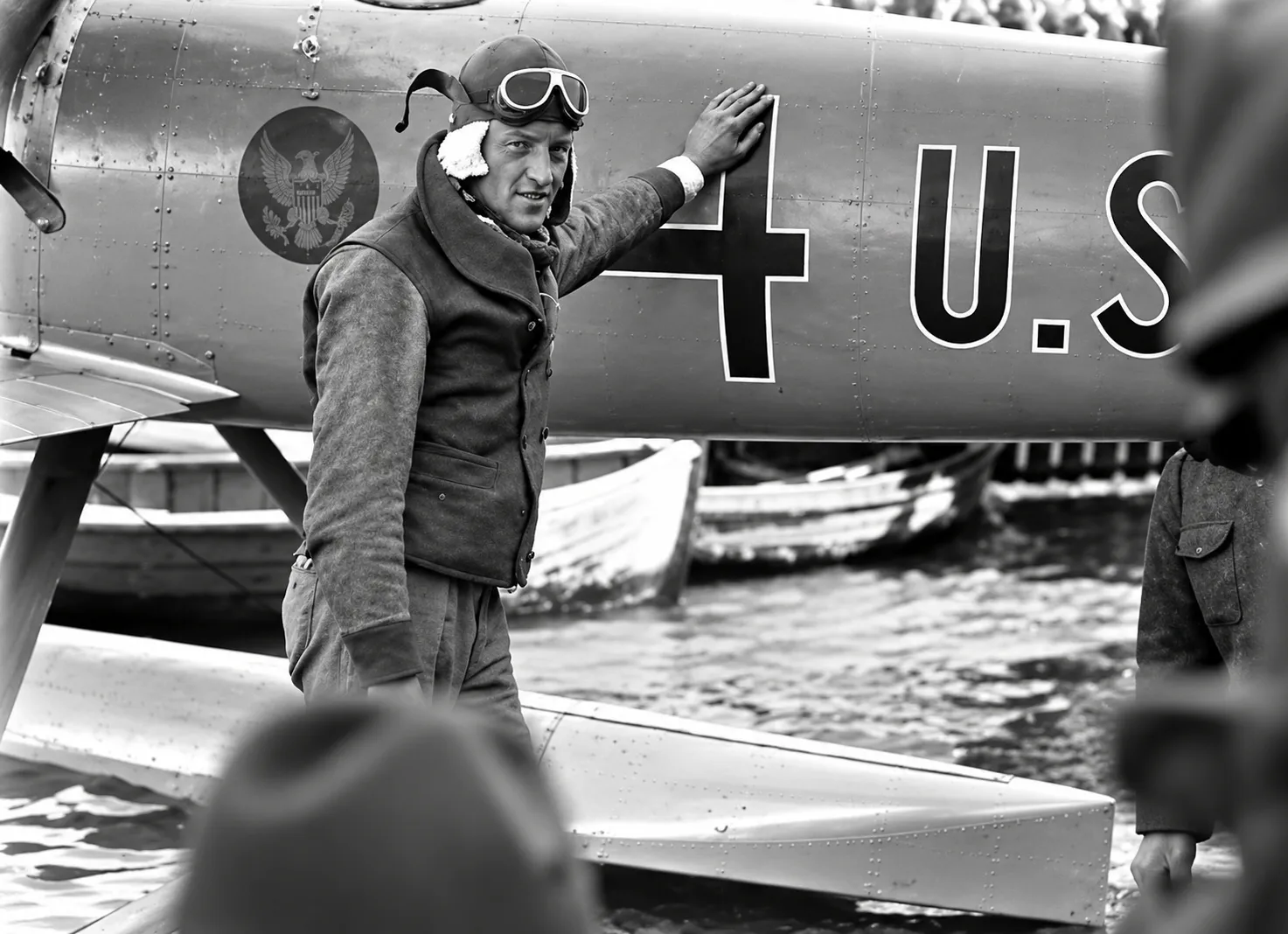
The eighth Schneider Trophy race was held at Bay Shore Park, Baltimore, Maryland, on 26 October 1925, the first contest staged in the United States. The official program announced the event for 24 October, but a gale and rough water led organizers to postpone it two days. Five aircraft ultimately started; three completed the race. The contest had been deferred from 1924 after a lack of foreign competitors.
Entrants, aircraft, and pilots
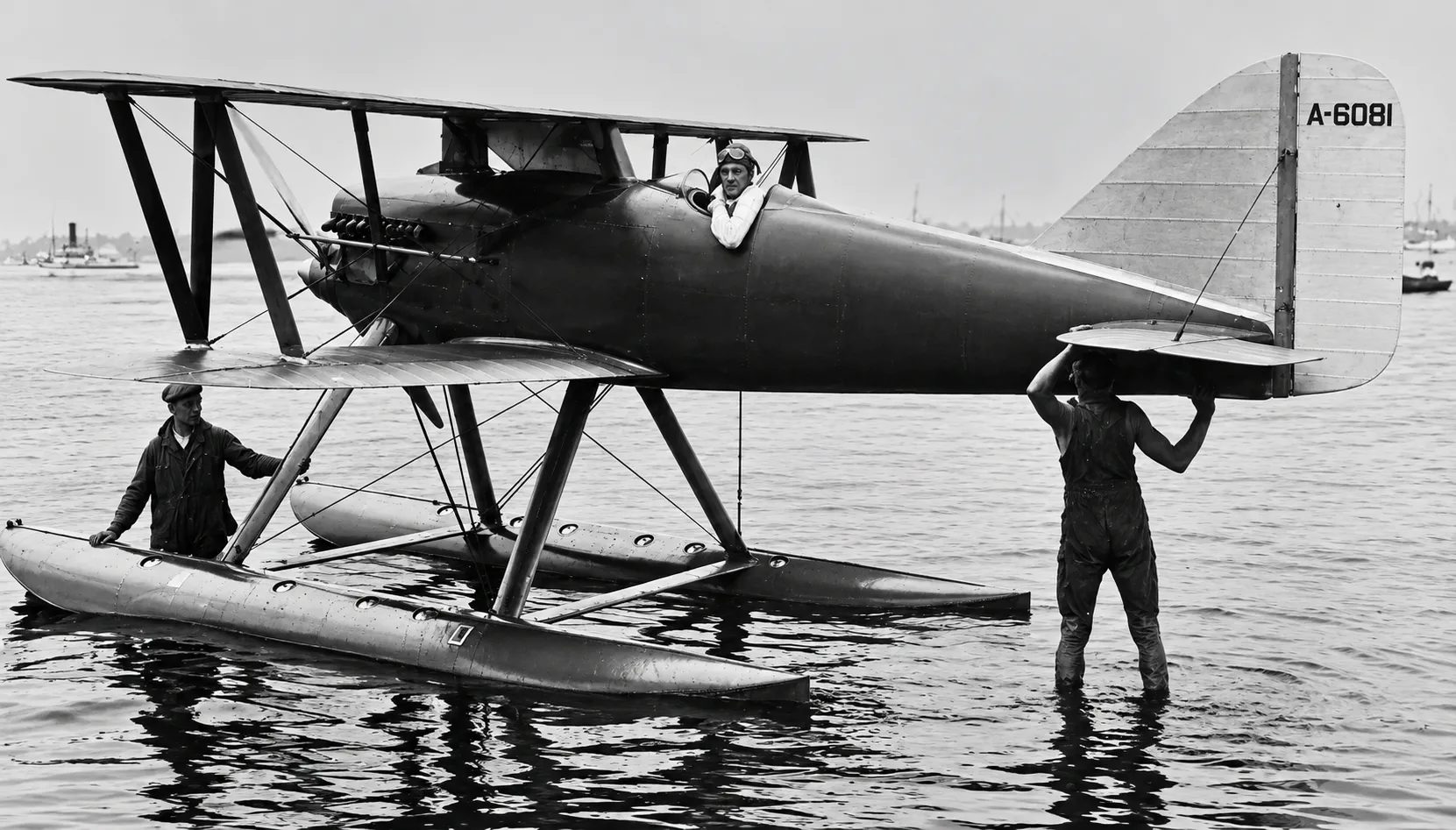
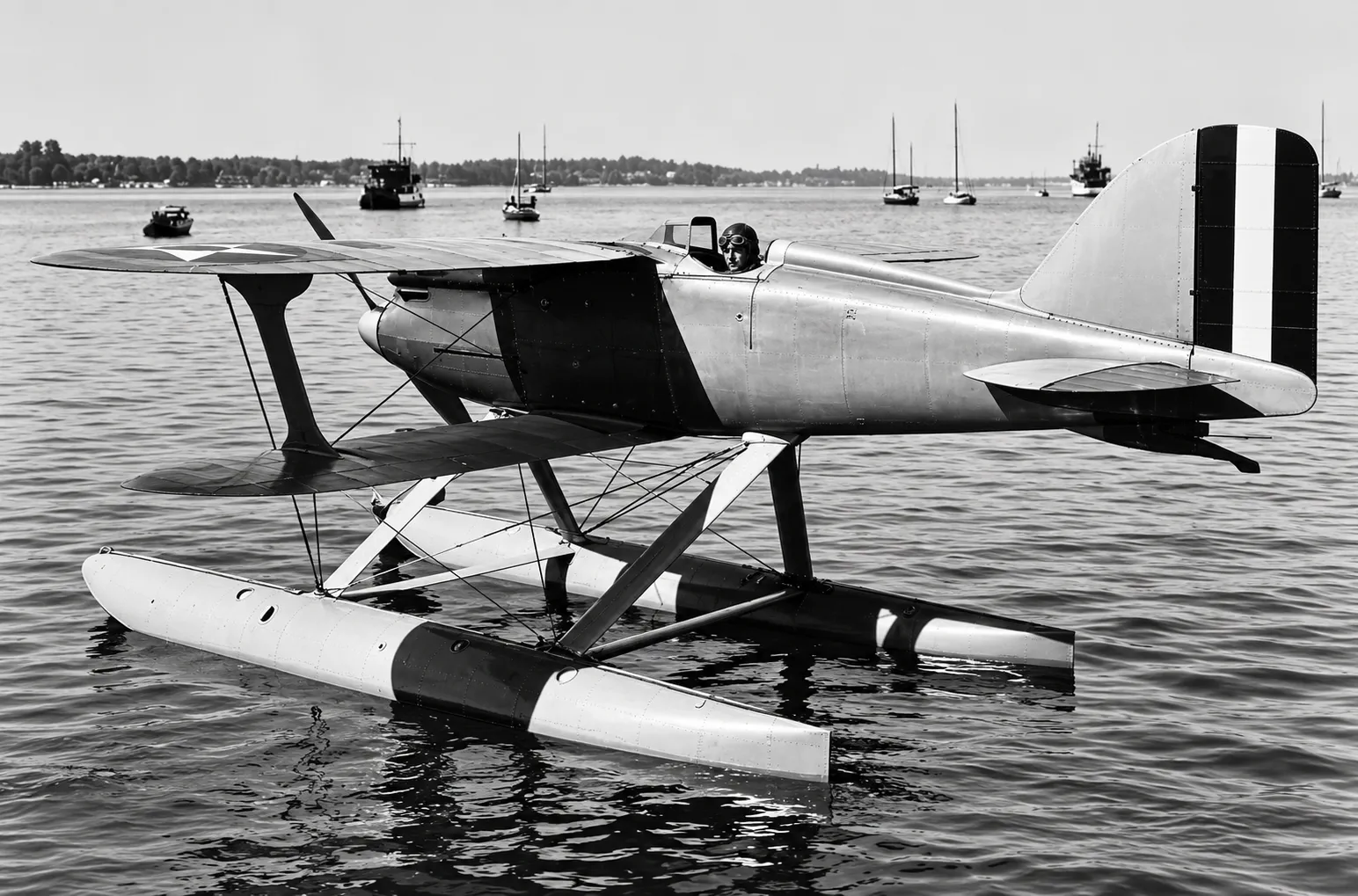
United States: Three Curtiss R3C-2 floatplane racers represented the Army and Navy. Army 1st Lt. James H. “Jimmy” Doolittle flew aircraft A.7054, race number 3. Navy Lt. George T. Cuddihy flew A.6979, number 2; Navy Lt. Ralph A. Ofstie flew A.6978, number 1. A Curtiss R2C-2 was a reserve aircraft, not a starter.
Great Britain: Capt. Hubert Broad flew the Gloster III (usually identified as N194), a compact biplane with a Napier Lion engine. The planned Supermarine S.4, flown by Capt. Henry Biard (also spelled Baird in some records), crashed into the water during pre-race high-speed navigability trials; Biard escaped. The reserve Gloster, N195, associated with Bert Hinkler, was damaged during trials, leaving Broad as Britain's sole starter.
Italy: Giovanni de Briganti competed in a Macchi M.33 flying boat. A contemporary retrospective says his assigned machine developed engine trouble and he used the other team's M.33 associated with Riccardo Morselli; Morselli did not appear among the five starters or the finishers. The two Macchis used Curtiss D-12 engines. Sources vary in spelling Morselli's first name as Riccardo or Ricardo.
Race events and official outcome
The aircraft started at intervals. Doolittle built a strong lead and was praised for using steep, tight banked turns around the pylons rather than making broad, slow arcs. Smithsonian's race-scorecard note credits his climb toward the pylon followed by a steep diving bank with helping his speed. A contemporary report estimated that the maneuver saved distance, but the exact estimate should be treated as commentary, not measured course data.
Cuddihy developed motor trouble on the final lap and was forced down; the U.S. Air Service account says the aircraft came down with flames from its intake manifold. Ofstie retired on lap six after running out of fuel. Their status is reported variously as “retired,” “failed to finish,” or “out” on the relevant lap; neither placed in the official finishing order.
Finishing order: Doolittle won for the United States in a Curtiss R3C-2, with Hubert Broad second in the Gloster III and Giovanni de Briganti third in the Macchi M.33. The Smithsonian archival caption records Doolittle's average at 232.573 mph; an associated museum summary rounds it to 232 mph, while another Smithsonian summary gives 232.17 mph. Contemporary and retrospective tables commonly print 232.573 or 232.57 mph. Broad's average is generally given as about 199.1 mph; de Briganti's as about 168.4–168.5 mph. Reported exact elapsed times include 56:06.37 for Doolittle, 1:05:30.95 for Broad, and 1:17:27.99 for de Briganti, but these precise times are chiefly reproduced in specialist race-result compilations.
Result details:
| Place / status | Pilot | Aircraft | Reported result |
|---|---|---|---|
| 1 | James H. Doolittle (USA, Army) | Curtiss R3C-2, A.7054 | 56:06.37; 232.573 mph (archival caption) |
| 2 | Hubert Broad (Great Britain) | Gloster III, N194 | 1:05:30.95; about 199.1 mph |
| 3 | Giovanni de Briganti (Italy) | Macchi M.33, M.M.49 (reported) | 1:17:27.99; about 168.4–168.5 mph |
| Retired, lap 7 | George T. Cuddihy (USA, Navy) | Curtiss R3C-2, A.6979 | Motor trouble / oil-pipe problem reported |
| Retired, lap 6 | Ralph A. Ofstie (USA, Navy) | Curtiss R3C-2, A.6978 | Fuel exhaustion / pump trouble reported |
Significance and uncertainties
Doolittle's win was the United States' second Schneider Trophy victory and established a race average far above the previous winning speeds. His close-in, steeply banked cornering became a celebrated example of how piloting technique could exploit the high-performance racer. On 27 October he flew a separate straight-course speed attempt and set a seaplane record of about 245.7 mph; that was not part of the Trophy race result.
Some sources report Doolittle's race average as 232.17 mph, while the Smithsonian archival image record, AirRace's race table, and the 1929 U.S. Air Service retrospective give 232.573/232.57 mph. Short Smithsonian summaries round it to 232 mph. This file uses the more precise archival caption while preserving the discrepancy. The official program lists 24 October, but the race was actually flown on 26 October. N194/N195 assignment details and the De Briganti–Morselli aircraft substitution are less consistently summarized than the podium; those details are flagged rather than treated as fully settled. Accounts also differ on how many aircraft were originally entered versus actually started: AirRace describes thirteen initial entries, but only five starters are consistently identified.
Sources: Smithsonian National Air and Space Museum, official-program collection record; Smithsonian archival caption for Doolittle's R3C-2 and reported speed; Smithsonian National Air and Space Museum, race scorecard and Doolittle's turning technique; AirRace, Schneider Trophy results table; AirRace, concise history and field size; U.S. Air Service Newsletter (1925), race account; U.S. Air Service Newsletter (1929), results and retirements; Science Museum Group, 1925 Schneider Trophy race documents; U.S. Naval Institute, “The Curtiss Racers”.