1914
Location
Race Details
1914 Schneider Cup Course
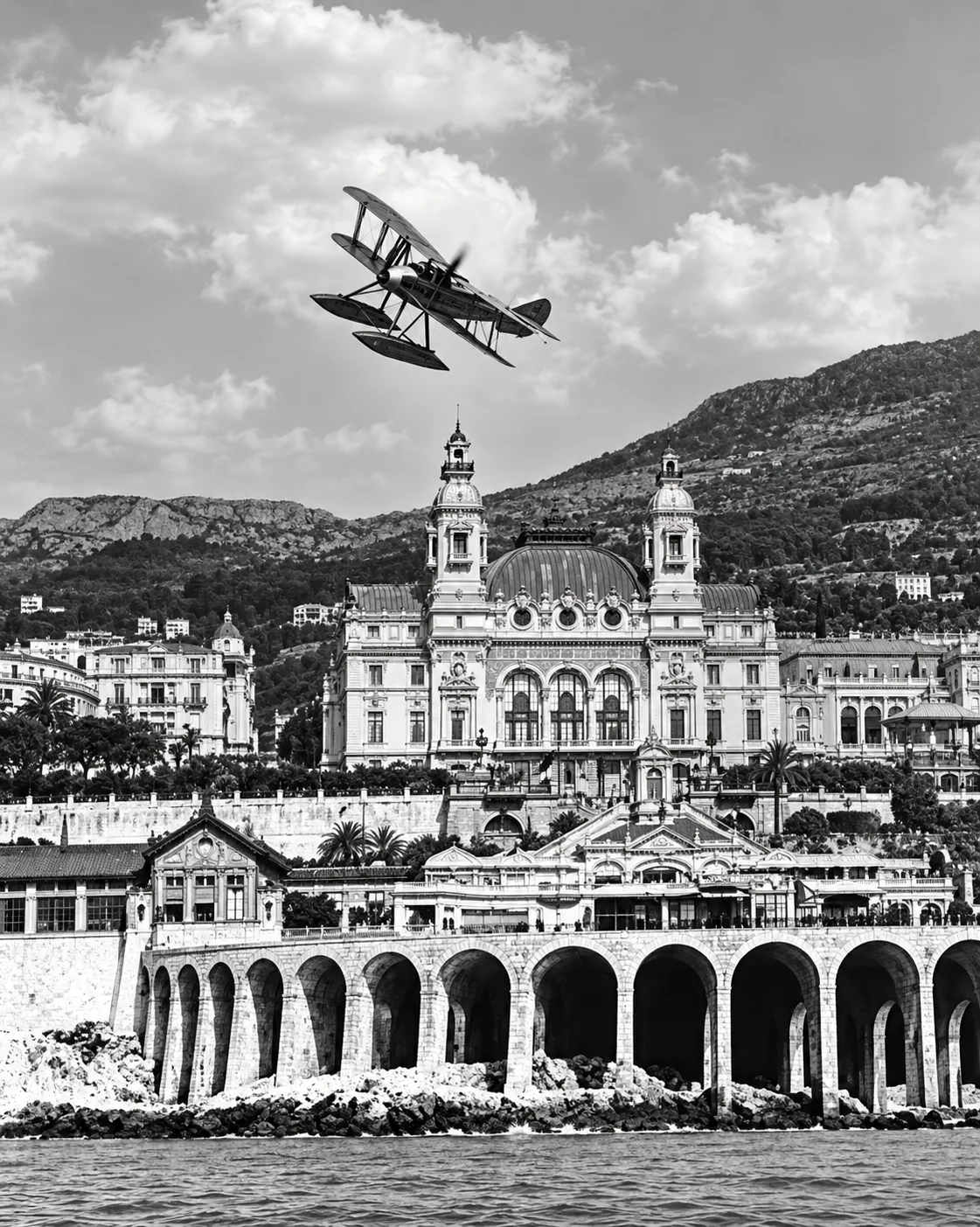
The second Schneider Trophy race took place at Monaco on 20 April 1914. The commonly reported course consisted of 28 laps of about 10 kilometres each, or roughly 280 kilometres (174 statute miles). The Society of Air Racing Historians lists 28 laps of a 10 km course, as does a 1929 U.S. Air Service retrospective. The race took place over the sea in the bay between Monaco and Cap Martin. A contemporary-era illustrated history describes the route as four-sided, while other later accounts characterize it as triangular or simply give lap length without specifying the number of corners. This map uses an approximate four-marker loop to reflect the four-sided account; the exact geometry and buoy coordinates are unverified. It is a reconstruction for orientation, not a surveyed historical chart. Sources: AirRace results, the U.S. Air Service Newsletter, and Wonders of World Aviation.
Before flying the circuit, competitors had to cross the start line on the water and navigate for 2.5 miles before taking off. Regulations also required two water landings during the first lap; these could be brief “circuits and bumps” rather than full stops. Those rules made water handling, takeoff performance and the ability to alight safely part of the contest, not merely the seaplanes’ airborne speed. The specialist history at Kingston Aviation describes the two required water landings and the initial run. The phrase “2.5 miles” is not always converted consistently in later descriptions, so no exact metric conversion is implied here.
The circuit’s long leg ran out from the Monaco waterfront toward Cap Martin, with the return and turns kept offshore. The start/finish area was by Monaco, but the sources reviewed do not give reliable coordinates for the start line or each turning marker. The National Archives catalogue lists a 1914 Schneider Trophy course plan as “as above” in its collection description, confirming a historic course plan exists in the archive, but the catalogue text alone does not reveal its precise buoy positions.
There is also a distance-and-lap-count variation. The stronger-supported listing is 28 × 10 km = 280 km. The Italian Air Force Association describes a course of about five nautical miles flown 30 times, totaling 282.8 km. These totals are close, but the lap counts and definitions of course length differ. Its reported average speed is also unlike the approximately 139.7 km/h implied by the commonly listed winning time and distance. The available sources do not resolve whether this reflects a different measurement convention, a transcription problem, or an error. See the Italian Air Force Association history alongside the results and retrospective links above.

The course length and map’s red line is a visual reconstruction, not a claim to the exact historical buoy layout.
The Winner
(100 hp)
86.78 mph

Click the Icons above to be redirected to Wikipedia Information on that subject









- «
- 1
- 2
- »
What happened on the circuit
The 1914 contest was held at Monaco on 20 April, with the war interrupting the Schneider races afterward until 1919. Entries came from France, Great Britain, Switzerland, the United States and Germany, although the starting field was much smaller than the list of entrants and trial pilots. The core race-day contest included British pilot Howard Pixton in the Sopwith, Swiss pilot Ernest Burri in an FBA flying boat, French Nieuport pilots Gabriel Espanet and Pierre Levasseur, and British entrant Lord Carbery. Sources vary on which other entrants actually started, withdrew, or were only present in qualifying and practice.
Results and significance:
| Result | Pilot | Aircraft | Time / average speed |
|---|---|---|---|
| 1 | Howard Pixton (Great Britain) | Sopwith Tabloid floatplane (Sopwith Schneider), no. 3 | Average speed reported as 139.66 km/h (86.78 mph); published figures vary |
| 2 | Ernest Burri (Switzerland; also spelled Burry) | FBA flying boat, no. 7 | Average speed reported as 82.35 km/h (51.17 mph) |
| Retired | Gabriel Espanet (France) | Nieuport seaplane, no. 5 | Retired after engine trouble; sources differ between laps 16 and 17 |
| Retired | Pierre Levasseur (France) | Nieuport seaplane, no. 6 | Retired after engine trouble; sources differ between laps 17 and 18 |
| Retired | Lord Carbery (Great Britain) | Morane-Saulnier or Deperdussin, depending on source | Retired on lap 3 |
| Did not finish | Maurice Prévost (France) | Deperdussin | Listed as giving up at the start; no finishing time |
Notes on the record. Howard Pixton won the 20 April 1914 Monaco race for Great Britain in the float-equipped Sopwith Tabloid, often called the Sopwith Schneider. Ernest Burri of Switzerland finished second. Pixton’s average speed is usually given as about 139.7 km/h (86.8 mph); HydroRetro lists 139.66 km/h. A commonly cited race distance is 28 laps of a roughly 10 km course. HydroRetro: 1914 race history and results; AirRace: Schneider Trophy race accounts; Wonders of World Aviation: Schneider Trophy.
Uncertainties and variations. Published winning speeds differ: HydroRetro gives 139.66 km/h, while other summaries cite about 139.74 km/h or 86.8–86.9 mph. Reliable summaries consulted do not consistently agree on Pixton’s official elapsed time, so the table gives the reported average speed without inventing a time. Withdrawal laps for the French pilots also differ by a lap between sources. Lord Carbery’s aircraft is identified variously as a Morane-Saulnier or Deperdussin, and Ernest Burri’s surname appears as both Burri and Burry. This Day in Aviation: 20 April 1914; AirRace: Schneider Cup results.
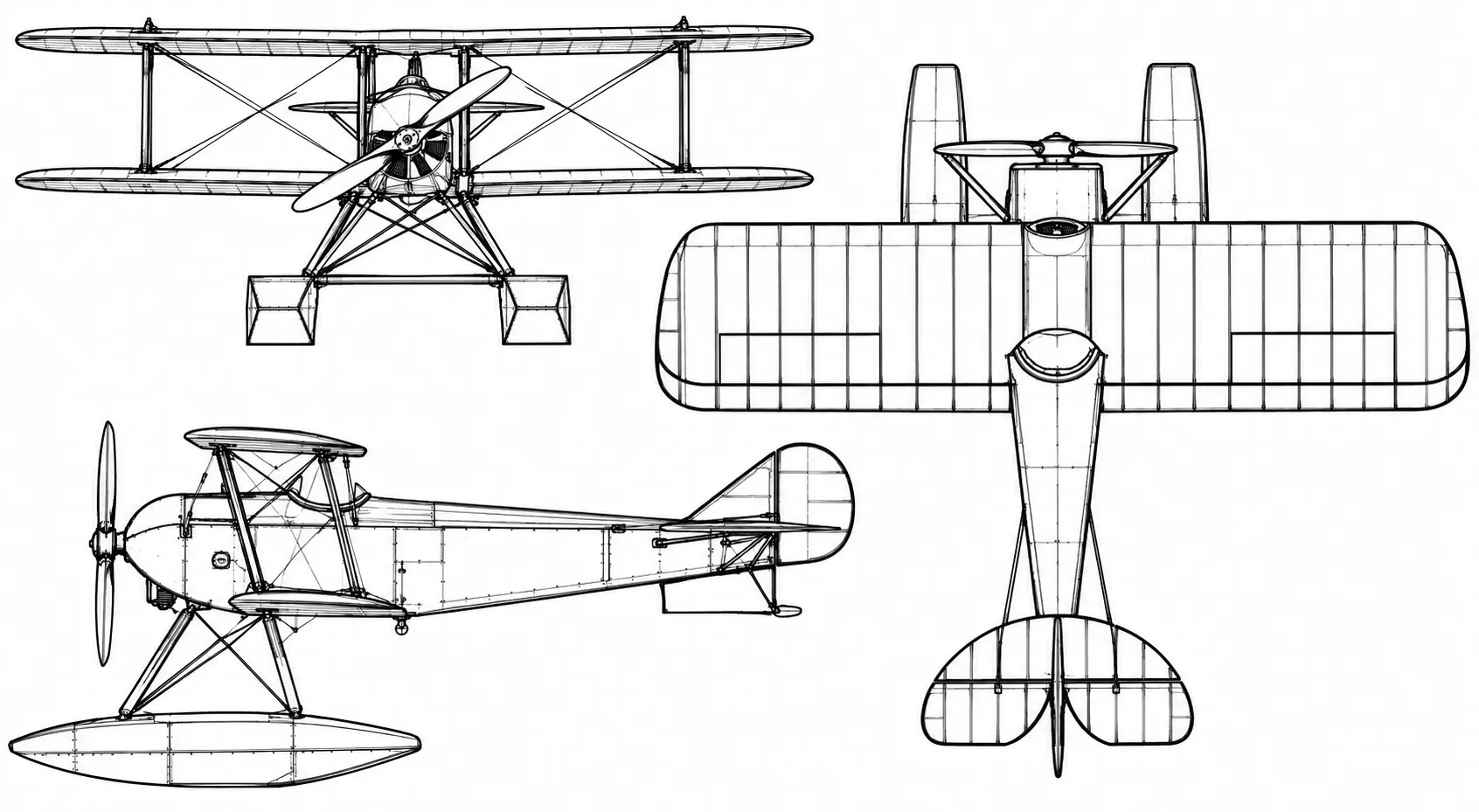
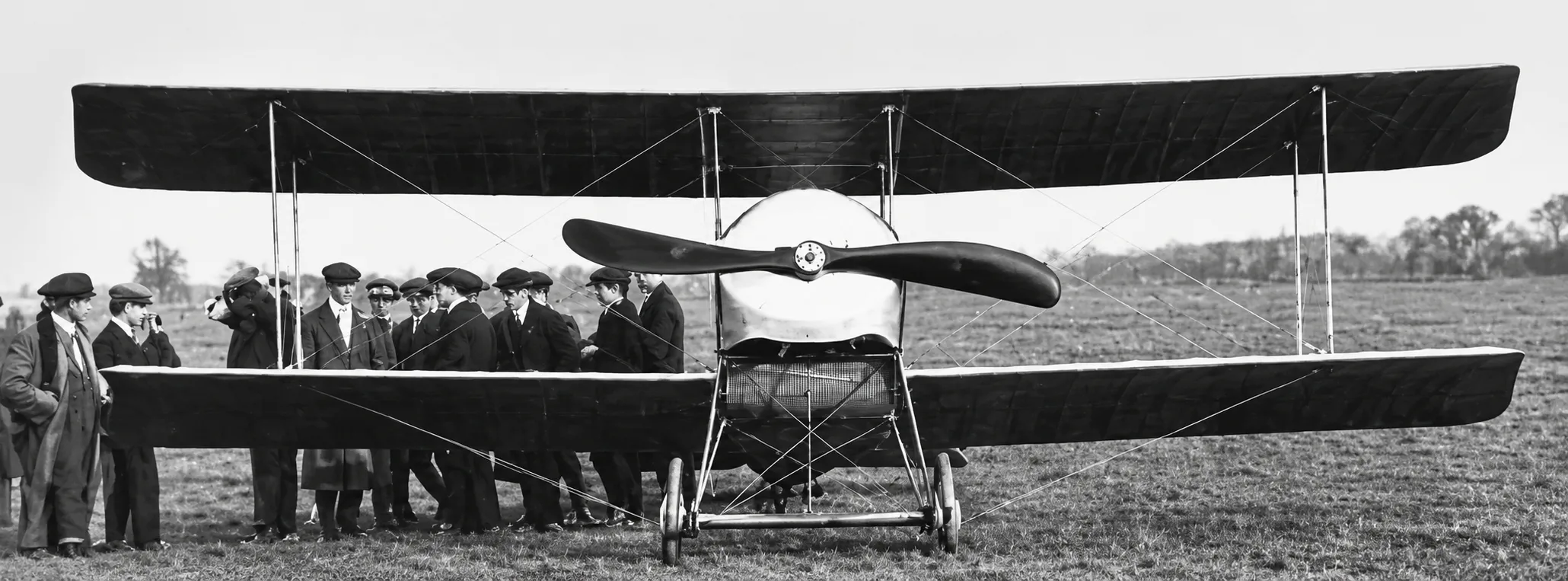
Pixton’s Tabloid had been adapted from a small landplane into a floatplane, using twin main floats and a 100 hp Gnome Monosoupape engine. It was regarded as a low-powered entry beside the larger French machines, but its light airframe and speed proved decisive. Kingston Aviation recounts that the initial single central float arrangement had failed during testing on the River Hamble; the team redesigned it with twin floats before shipping the machine to Monaco. The aircraft remained difficult to handle on the water, yet at Monaco Pixton made an exceptionally short takeoff run and quickly pulled away from the opposition. Some reports mention a misfiring cylinder during the race, but the exact mechanical condition varies by account.
The French Nieuports of Espanet and Levasseur both retired with engine failures, described in one account as overheating and seizure of the rear cylinder row. Carbery’s borrowed Deperdussin failed early. Burri’s FBA was slow to get airborne and later needed to land for fuel, but he restarted and finished in second place. Retrospective accounts differ on his lap count and exact average speed, though they agree that he was the only other finisher.
Pixton’s commonly recorded race time is 2 hours, 13 seconds (also printed as 2:00:13.4), with average speed usually stated around 139.7 km/h (86.8 mph). AirRace lists 86.434 mph, while HydroRetro gives 139.66 km/h and the U.S. Air Service account rounds to 86.8 mph. These are small discrepancies likely reflecting rounding or course-distance conventions. An Italian history gives about 89.7 km/h, which is inconsistent with the other results and the recorded elapsed time, so that figure is best treated as an outlier. After finishing, Pixton flew two further laps to reach a reported 300 km total and set a seaplane speed record; sources give slightly varying figures for the extra-flight time and average.
Pixton’s victory gave Great Britain its first Schneider Trophy win, ending France’s hold after the inaugural 1913 race. It also demonstrated how a compact, carefully flown floatplane could outperform more powerful rivals. Further reading: AirRace results, AirRace race narrative, HydroRetro results and retirements, Kingston Aviation’s detailed race account, the U.S. Air Service Newsletter retrospective, and Wonders of World Aviation.