Lieutenant John Nelson Boothman
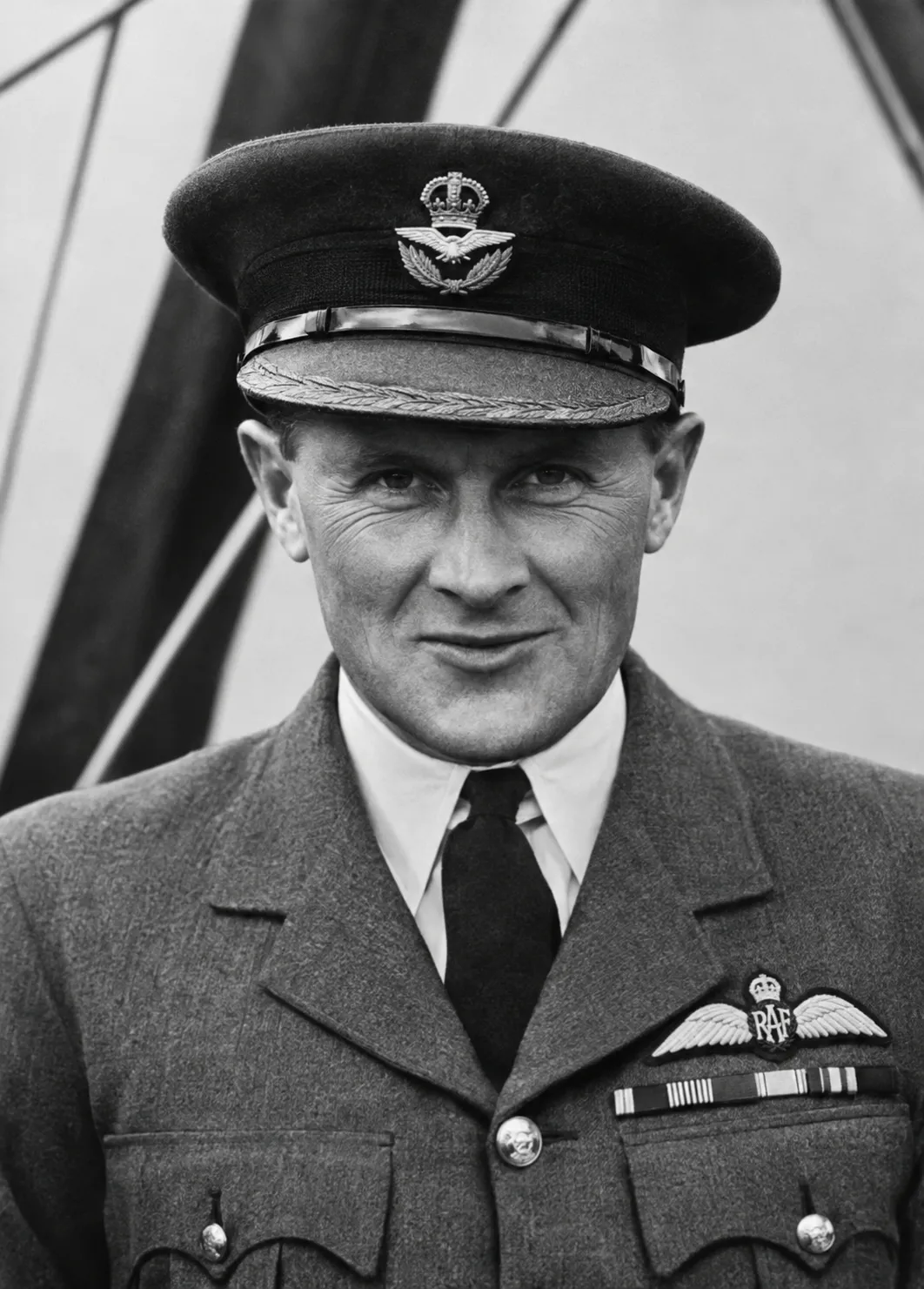


At a glance
Pilot: John Nelson Boothman, Royal Air Force
Rank at the race: Flight Lieutenant. “Lieutenant” alone is not the correct RAF rank for the 1931 contest.
Race: Schneider Trophy seaplane contest
Date and place: September 13, 1931, over the Solent and Spithead, based at Calshot, England
Aircraft: Supermarine S.6B, registration S1595, with a Rolls-Royce “R” engine
Result: Completed seven laps at an average speed of 340.08 mph
Why it mattered: Britain’s third consecutive Schneider Trophy victory secured the Trophy permanently. It was also the final contest in the series.
The race had originally been scheduled for September 12 but was flown on September 13. Contemporary reports and official histories give Boothman’s average as 340.08 mph. That is the average over the full course, not the separate straight-line record set later that day by fellow pilot George Stainforth.
Early life
John Nelson Boothman was born in Wembley, Middlesex, on February 19, 1901. His father, Thomas John Boothman, was a railway clerk, and his mother was Mary Burgess. He attended Harrow County School. As a teenager in 1918, while still too young to enlist in the British armed forces, he served as a motor ambulance driver with the French Red Cross on the Balkan front. The Oxford Dictionary of National Biography provides biographical details about his early life.
Early flying career
After returning to Britain, Boothman took private flying lessons at Hendon and gained his pilot’s licence. He joined the Royal Air Force in 1921 and trained at No. 1 Flying Training School. He served as a pilot and instructor, including at the Central Flying School. In 1922, he flew operationally during the Chanak crisis in Turkey. Later, he served with bomber squadrons in Iraq, where his flying was assessed as exceptional.
In 1930, Boothman became a test pilot at the Marine Aircraft Experimental Establishment. The following year he joined the RAF High Speed Flight, the specialist unit assembled to prepare Britain’s Schneider Trophy entry. His operational flying, instruction, and test-pilot experience led to his selection to fly the course. The Air of Authority service chronology records his postings, while the Imperial War Museums’ 1931 newsreel record identifies him as the pilot of S.6B S1595.
The race
The Schneider Trophy was an international speed contest for seaplanes. Its 1931 course was a triangular circuit over the Solent and Spithead, off the Isle of Wight. The prescribed distance was seven laps of 50 kilometres each: 350 kilometres, or about 217.5 land miles. Although planned for September 12, the flight took place on September 13.
The race was not a head-to-head contest that year. France and Italy withdrew because their aircraft were not ready, leaving Britain without a foreign challenger. Boothman’s task was to fly the prescribed course and establish the result. A contemporary account acknowledged that the withdrawals removed much of the competitive element. See the 1931 Air Service Newsletter and the contemporary report in Nature.
Britain’s programme had nearly been cancelled after the government declined to fund new aircraft following the 1929 contest. Lady Houston donated £100,000 toward building the aircraft and engines, allowing the government to approve RAF participation. Supermarine built two S.6B aircraft, S1595 and S1596. Boothman was selected to fly S1595. The aircraft was a low-wing racing seaplane designed for speed, with a Rolls-Royce “R” engine and specialised surface cooling. The contemporary Air Service account describes the preparation and team.
The team’s reported instructions prioritized completing the course, beating records if possible, and avoiding unnecessary risks. The contemporary account said Boothman’s speed was limited by water temperature. It also observed that, without a foreign competitor, he had less reason to bank closely around the pylons. These details suggest a cautious approach, but the sources do not provide a detailed pilot log or telemetry from which to reconstruct every decision in the cockpit.
Boothman completed all seven laps. His recorded lap speeds were 343.1, 342.7, 340.0, 338.6, 339.6, 339.4, and 337.7 mph. He crossed the finish with an average of 340.08 mph. The Royal Air Force history page confirms the average and Britain’s third consecutive win. The Imperial War Museums newsreel record describes Boothman returning to land beside HMS Medea, where the ship’s crew applauded him.
Performance and tactics
Boothman’s average of 340.08 mph set a new Schneider course record. The course measured 350 kilometres, or about 217.5 land miles. Dividing that distance by the published average gives an approximate elapsed time of 38 minutes and 20 seconds; this is a calculation from the reported distance and speed, not a separately quoted official time.
The lap figures show a very fast, relatively steady run. The first lap was fastest at 343.1 mph, and the seventh was slowest at 337.7 mph. The average includes the turns and the full course; it should not be confused with a straight-line top speed. The contemporary account attributed some restraint to water temperature and to instructions to avoid unnecessary risk.
Later that day, George Stainforth flew the second S.6B, S1596, in a separate straight-line record attempt. His 3-kilometre speed record was a different flight and was not part of Boothman’s Trophy result. The Air Service Newsletter records Stainforth’s result and notes that early figures for his speed were corrected using photographic timing.
After the win
Boothman received the Air Force Cross for winning the Schneider Trophy. He continued in RAF service and held flying, test, staff, and command roles. During the Second World War, he served in operational and senior staff positions, including with Bomber Command. He was awarded the Distinguished Flying Cross for wartime service.
After the war, Boothman continued to rise through the RAF’s senior ranks, eventually becoming Air Chief Marshal. His later roles included senior command in Coastal Command. He retired in 1956 and died the following year. His service history and award citations are summarized in the Air of Authority biography; the Oxford Dictionary of National Biography also covers his life and RAF career.
Notable facts and legacy
Britain’s victories in 1927, 1929, and 1931 were three consecutive wins, securing permanent possession of the Trophy.
The 1931 contest was the final Schneider Trophy race. With the Trophy retired, the competition ended after eleven contests spanning 1913 to 1931.
Boothman’s 340.08 mph was his average over the Schneider course. Stainforth’s later straight-line record was a separate achievement by a different pilot in the other S.6B.
The winning aircraft, S1595, is now in the collection of the Science Museum in London, along with the Schneider Trophy. See the RAF Museum’s 1931 timeline.
Sources
- 1931 Air Service Newsletter: race account, lap speeds, aircraft, team, and Stainforth’s separate record
- Royal Air Force: Record Breakers
- Imperial War Museums: 1931 Schneider Trophy newsreel record
- Imperial War Museums: British Screen News footage record
- Nature, “The Schneider Trophy Contest,” September 19, 1931
- Oxford Dictionary of National Biography: John Nelson Boothman
- Air of Authority: John Boothman service chronology and award citations