David Rittenhouse
At a glance
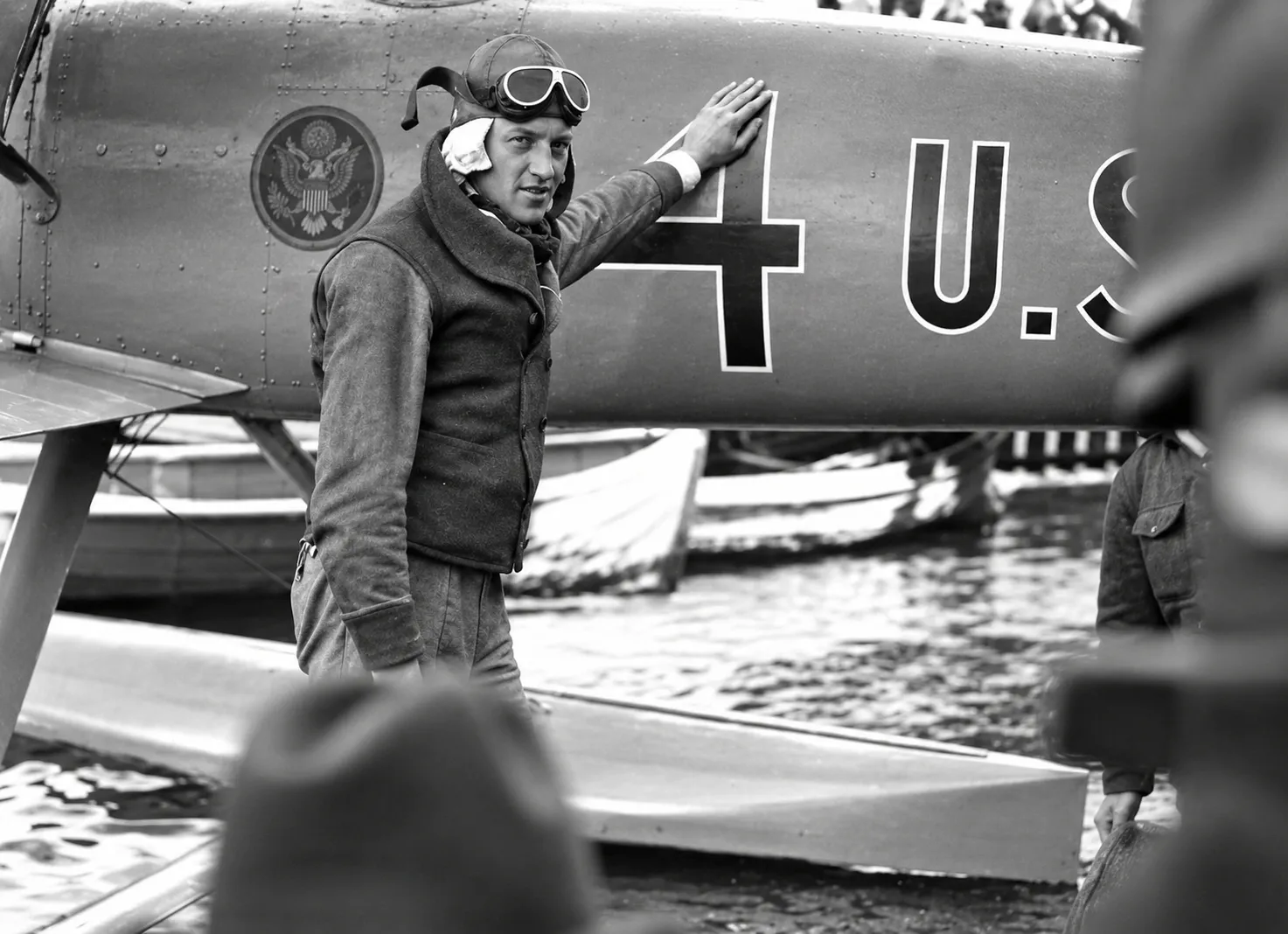
Pilot: U.S. Navy Lieutenant David Rittenhouse.
Race: Schneider Trophy at Cowes, England, in 1923.
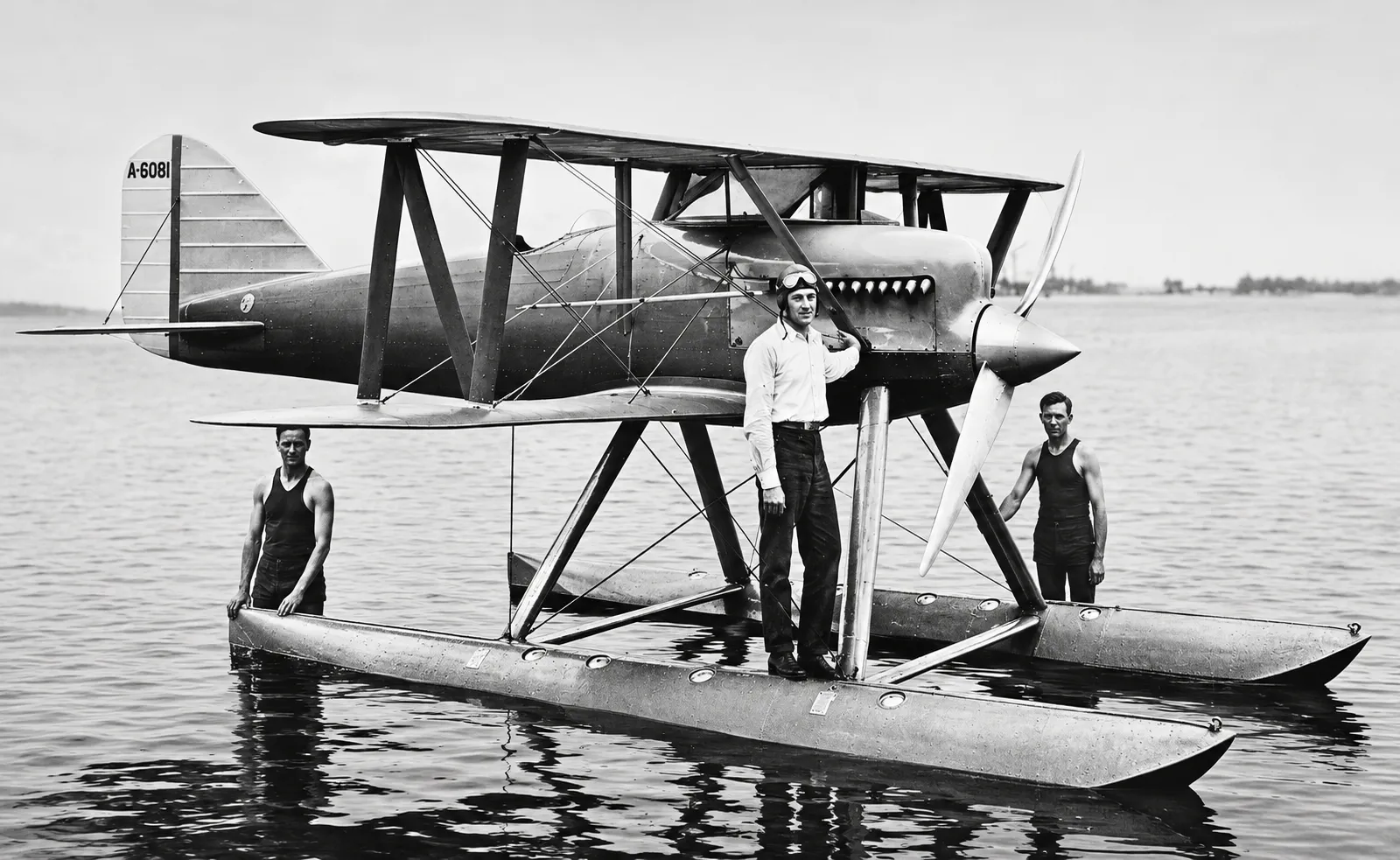
Aircraft: Curtiss CR-3 seaplane, powered by a Curtiss D-12 engine.
Result: First place, averaging about 177.4 mph (285.5 km/h). His teammate Rutledge Irvine finished second in another CR-3. The win brought the trophy to the United States for the first time and demonstrated how streamlined racers and powerful engines could raise seaplane performance. Naval History and Heritage Command, “Speed Racers”; Race account and lap figures.
Early life
David Rittenhouse was born in St. Paul, Minnesota, on 16 June 1894. A biographical account identifies his parents as banker Charles Edwain Rittenhouse and Grace Hubbell Rittenhouse. He attended the University of Minnesota, but left before graduating to serve overseas during the First World War. The available sources provide limited detail about his childhood and early interests. This Day in Aviation biography.
Early flying career
In March 1917, Rittenhouse enlisted in the French Army and served with its 21st Division. He returned to the United States that autumn and enlisted in the U.S. Navy. He completed aviation ground school at the Dunwoody Institute in Minneapolis, then trained in Florida, including at Key West, Miami and Pensacola. He received his Navy commission as an ensign in September 1918. This Day in Aviation biography.
Rittenhouse served at sea before moving to naval aviation assignments in 1922. His 1923 Schneider entry followed a difficult previous season: he had been forced to drop out of the 1922 Curtiss Trophy race. The Navy’s new CR-3 racers offered him another opportunity to compete at the highest level. U.S. Naval Institute, “The Navy Takes to the Air Races”; This Day in Aviation biography.
The race
The Schneider Trophy was an international seaplane contest. In 1923, the course was a triangular circuit around the Solent, with turning points near Cowes, Selsey Bill and Southsea. Pilots flew five laps, covering about 186 nautical miles (roughly 344 kilometres). The aircraft also had to meet water-operation requirements; in this race, accounts describe a required water taxi as part of the circuit. U.S. Navy history, “United States Naval Aviation 1910–1995”; Hydroretro’s 1923 race history.
The U.S. Navy brought two Curtiss CR-3s for Rittenhouse and Irvine, along with a Wright NW-2 and a TR-3A reserve aircraft. Britain entered Henry Biard in the Supermarine Sea Lion III and Reginald Kenworthy in the Blackburn Pellet. France also entered aircraft, including the CAMS 38 flown by Maurice Hurel. Italy withdrew before the race, and damage and mechanical problems reduced the field further. Four aircraft ultimately started: the two American CR-3s, Biard’s Sea Lion III and Hurel’s CAMS 38. This Day in Aviation race account; Schneider Cup race results.
The CR-3 was a Navy-funded development of Curtiss racing aircraft. It combined floats with a low-drag fuselage, streamlined details and a liquid-cooled D-12 engine. The two American aircraft were among the fastest machines in the field. The Navy’s official history identifies the engine but does not give its horsepower in the race entry; other accounts generally list it at about 465 hp. U.S. Navy aviation chronology; 1925 U.S. Air Service account.
The race began at 11 a.m. The American team started first, with Rittenhouse and Irvine in their CR-3s; Britain and France followed at intervals. Rittenhouse was nearly around the first lap by the time the British aircraft began. His first lap was his slowest, after which he settled into a faster rhythm. Hurel retired with engine trouble, while Biard continued to third place. Rittenhouse completed the five laps ahead of Irvine. This Day in Aviation race account; Schneider Cup race results.
Performance and tactics
The Navy records Rittenhouse’s race average as 177.38 mph (about 285.5 km/h). A results table gives 177.266 mph, while other contemporary or retrospective sources round the result to 177.38 mph. This small difference likely reflects revised course or timing figures and rounding; the sources agree on the winner and the approximate average. Irvine averaged about 173.4 mph, and Biard finished third. Rittenhouse’s lead over Irvine was about 1 minute 39 seconds. U.S. Navy aviation chronology; Schneider Cup race results.
Published lap figures give Rittenhouse’s times as 15 minutes 6.4 seconds, 14 minutes 22.2 seconds, 14 minutes 24.8 seconds, 14 minutes 22.2 seconds and 14 minutes 11.2 seconds. His final lap was the fastest, averaging about 181 mph. That improvement shows he maintained or increased pace as the race progressed, but the figures alone do not reveal why. No dependable source establishes his thoughts or a specific tactical plan, so explanations beyond the recorded lap sequence would be inference. Lap-by-lap race account.
During the race, Rittenhouse also set a Fédération Aéronautique Internationale speed record over 200 kilometres: 169.89 mph (273.41 km/h). That measured-distance record is distinct from his average speed across the full Schneider course. The distinction matters because the full race included turns and water-handling requirements, while the 200-kilometre record measured speed over a specified distance. U.S. Navy aviation chronology; This Day in Aviation race account.
After the win
The victory brought Rittenhouse international recognition, but the available sources give fewer details about his immediate assignments after the race than about the event itself. He continued his Navy career and was promoted to lieutenant commander in 1931. He retired from the Navy in 1941 and later worked for Grumman Aircraft Engineering Corporation. U.S. Congressional Record, 1932; This Day in Aviation biography.
Rittenhouse died in St. Petersburg, Florida, on 29 October 1962, aged 68. The Smithsonian’s National Air and Space Museum preserves a photograph of him with the CR-3 in which he won the Schneider Trophy. This Day in Aviation biography; Smithsonian, “U.S. Navy Lt. David Rittenhouse and his Curtiss CR-3 racer”.
Notable facts and legacy
The 1923 win was the first time the United States won the Schneider Trophy. It also marked the first and second places for American aircraft in the event. The victory helped draw European attention to the United States’ advances in high-speed aircraft design and engines. The Navy later described the CR-3s’ success as a striking demonstration of American aviation progress after the First World War. Smithsonian Air & Space Magazine, “The Schneider Trophy”; Naval History and Heritage Command, “Speed Racers”.
Rittenhouse’s race also reflected the growing role of government-backed engineering in aviation. The CR-3 was developed under Navy contract, and its performance helped show how competition aircraft could test ideas in streamlining, propulsion and floatplane design. These lessons mattered beyond the trophy: the race was a public contest, but also a showcase for technologies that could inform later military aircraft. NASA history, “The Design Revolution: On a Streamline to the DC-3”; U.S. Navy aviation history.
Sources
- U.S. Navy, United States Naval Aviation 1910–1995 — official chronology of the race result and record.
- U.S. Air Service Newsletter, 1925 — retrospective summary of the 1923 race and D-12 engine rating.
- AirRace, Schneider Cup results — course, aircraft, elapsed times and recorded averages.
- This Day in Aviation, “28 September 1923” — Rittenhouse’s biography, race sequence, lap times and record.
- Naval History and Heritage Command, “Speed Racers” — Navy racing context and Rittenhouse’s victory.
- Smithsonian Air & Space Magazine, “The Schneider Trophy” — context for the American victory and aircraft development.
- Smithsonian National Air and Space Museum, “U.S. Navy Lt. David Rittenhouse and his Curtiss CR-3 racer” — photograph and race identification.
- U.S. Congressional Record, 10 March 1932 — Rittenhouse’s promotion to lieutenant commander.
- U.S. Naval Institute, “The Navy Takes to the Air Races” — context on Rittenhouse’s previous race setback and the Navy’s program.