ABOUT US
Welcome to Supermarine Seaplane, a charity dedicated to celebrating innovation, courage and pride
OUR MISSION
The fastest planes. The best pilots. The greatest aerial contest ever staged (1913-31). Today, sadly all but forgotten. The Supermarine Seaplane charity aims to bring the Schneider Trophy contests alive again for modern audiences with a flying replica of the Supermarine S5 at its centre: inspiring curiosity and participation internationally, and celebrating the heroism, engineering breakthroughs and national pride that made Britain’s victory, and ultimately the Spitfire, possible.
The key challenge is creating awareness and understanding, through communications, education and experience, but before that, building the Supermarine S5 aircraft to deliver that experience - the only flying Schnieder aircraft in the world.
Showing is so much more powerful than telling, so by displaying the aircraft both in the air and statically, people can become engaged, want to know more, to understand what they are seeing and hearing...
WHY YOU SHOULD CARE
RJ Mitchell, the Chief Designer of Supermarine Seaplane, designed 24 aircraft including the Schneider Trophy winners in 1927, 29 and 31. Without that experience, the testing of technologies, the honing of ideas, he could not have designed the war-winning Spitfire.
Britain isn’t a very happy place right now. It’s short in inspiration, self-confidence and drive. No one thing can fix this. But perhaps we can move the needle a little bit.
The importance and impact of Britain’s 1931 win of the Schneider Trophy can barely be grasped by today’s audiences. It was as if we won the Olympic 100m sprint, the Americas Cup, World Cup, F1 Drivers’ and Constructers’ championships and broke the World Air Speed Record all at once, using the members of Premiership football team. Yet no one remembers..
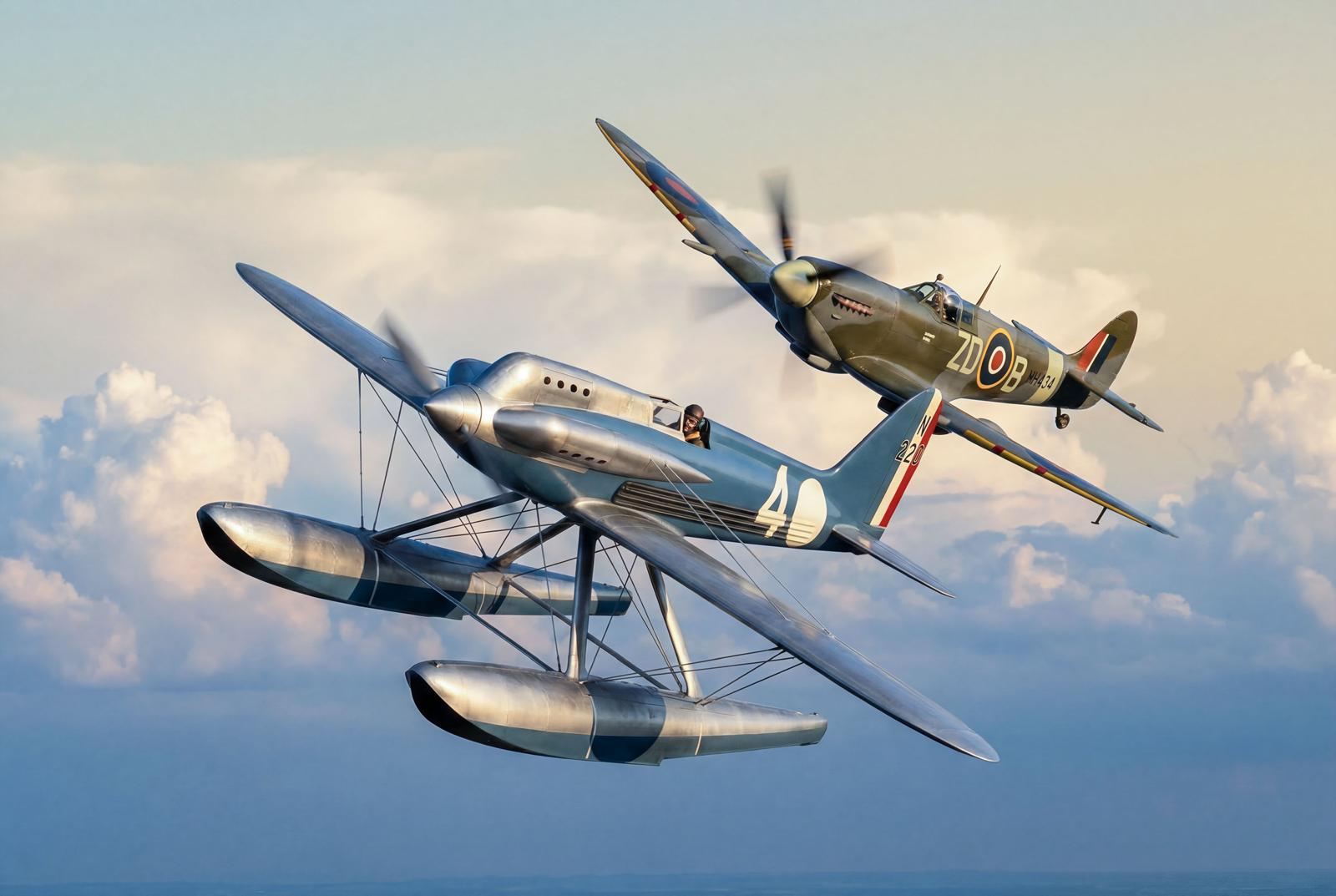
It was a golden era of national heroes, technological break throughs, record breaking and drama and it made the Spitfire possible.
The Schneider Trophy was a celebration of brains and bravado, gentlemen racers and national glory, so much so that Lady Lucy Houston gave £7m (in today’s terms) to complete the funding of the 1931 British entry. That’s how much it mattered then.
2031 is the centenary of the last of three wins and the right time to educate, inspire and celebrate. To get people interested in our past, but also the future; in technology, STEM, aeronautics and flying, even in dying traditional skills like construction in wood. So that’s what we need to do.
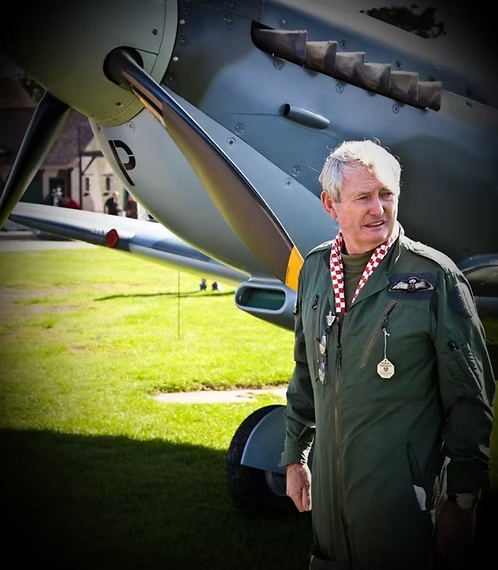
Air Marshall (Retd) Cliff Spink
CB CBE FCMI FRAeS
Military Pilot
One cannot overestimate the importance of the Supermarine S5 racing seaplane, for the ultimate effect it was to have on aircraft design in this country.
Designed by R J Mitchell for the Schneider Trophy seaplane races, the spin-off from his wonderful design was to have a fundamental impact on subsequent aircraft design, particularly fighter aircraft. For the first time ‘R J’ used a metal monocoque construction which would subsequently be used in the Spitfire some 10 years later – a giant leap in the lightweight and strong construction process. Having started the British in it's winning ways in the competition, the S5 was superseded by the more powerful S6 series which subsequently won the trophy outright. But it was the S5 that started this design concept and while history sometimes places this aircraft in the shadow of the S6, the importance of the S5 cannot be underestimated or understated.
Will Hosie and his team are to be congratulated on the project, to build a replica of the Supermarine S5, aircraft which had such a profound impact on aviation in Britain in the years that followed.
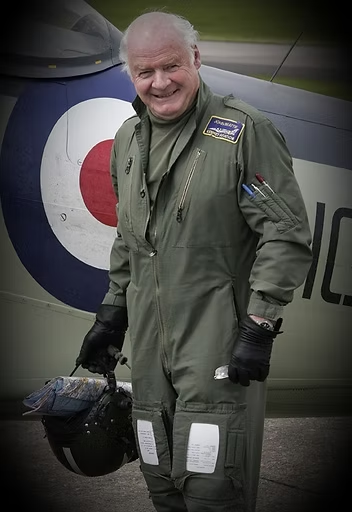
Lt Cdr John Beattie
MBE, FRAeS
RN Historic Flight 1986 to 1994
Military Pilot
It is imperative that we celebrate and remember the great innovations and achievements Britain made over the 117 or so years of powered flight.
Winning the Schneider Trophy was a classic example of ingenuity and resolve, producing a world-beating airplane that went on to become the basis for the Spitfire. In an era of rapid industrial progress, British designers and craftsmen stood out amongst all other technological countries as the best.
This project, as a living memorial, demonstrates considerable pride in our forebears and deserves the support of every aviation enthusiast to help it succeed.
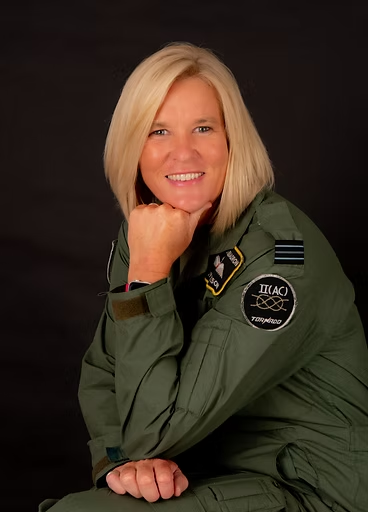
Mandy Hickson
RAF Fast-Jet Pilot, acclaimed keynote speaker, facilitator & coach on human performance factors,
author of ‘An Officer, not a gentleman.’
The building of the S5 by the charity Supermarine Seaplane is very worthy of your support. And to my mind there are three core reasons:
to return its vital role in the development of the Spitfire to the consciousness of the nationPlease support the team.
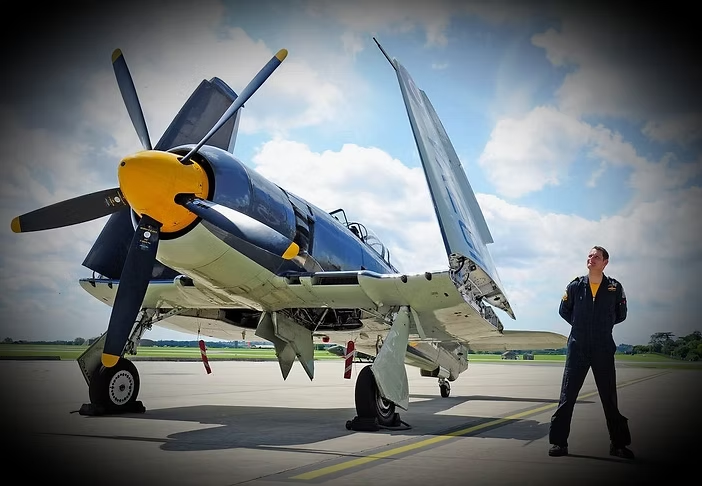
Lt Cdr Chris Gotke AFC
Military (Royal Navy Test) Pilot
I have always loved learning about events in history that pushed the technological bounds of aviation, and the contest to win the Schneider Trophy was definitely one of them. The Schneider Trophy was very different as the aircraft had to launch and recover from the water. This was still very new for aircraft. This water aspect made the design far more complicated and challenging, to race a floatplane. 12 races in total, over 18 years.
The Schneider trophy came to be in 1912 when Jacques Schneider offered 1000 pounds, to advance aviation. However, rather than the standard land courses, it was to be set from water.
In 1914 a very small Sopwith Tabloid aircraft won the race flown by Howard Pixton. This was a surprise and an upset, as it was the first British team combined with such a light aircraft, completely resetting the field. Won, once again in typical fashion, on a shoestring budget!
As the years progressed, the rules changed to allow a team to retain the Trophy if they won 3 out of 5 races. The Italians and Americans did battle. When it looked like the Trophy would be lost, a team called Supermarine entered, with UK backing. The name in itself is interesting, as Supermarine came from the fact it was over water, as opposed to a submarine.
Mitchell designed the S5, and then subsequently the S6, securing the win. The Schneider Trophy, which now sits in the science museum, is a reminder of how important Mitchell's learned work was, from the S5 design to ultimately being developed into the much-loved Spitfire.
So this race aircraft, designed to compete from water, was developed into a very effective and much-loved fighter that is hugely responsible for the successful 2nd World War efforts and beyond.
The return of an S5 represents a truly remarkable moment in time for Aviation as a whole. One which I am very much looking forward to seeing.
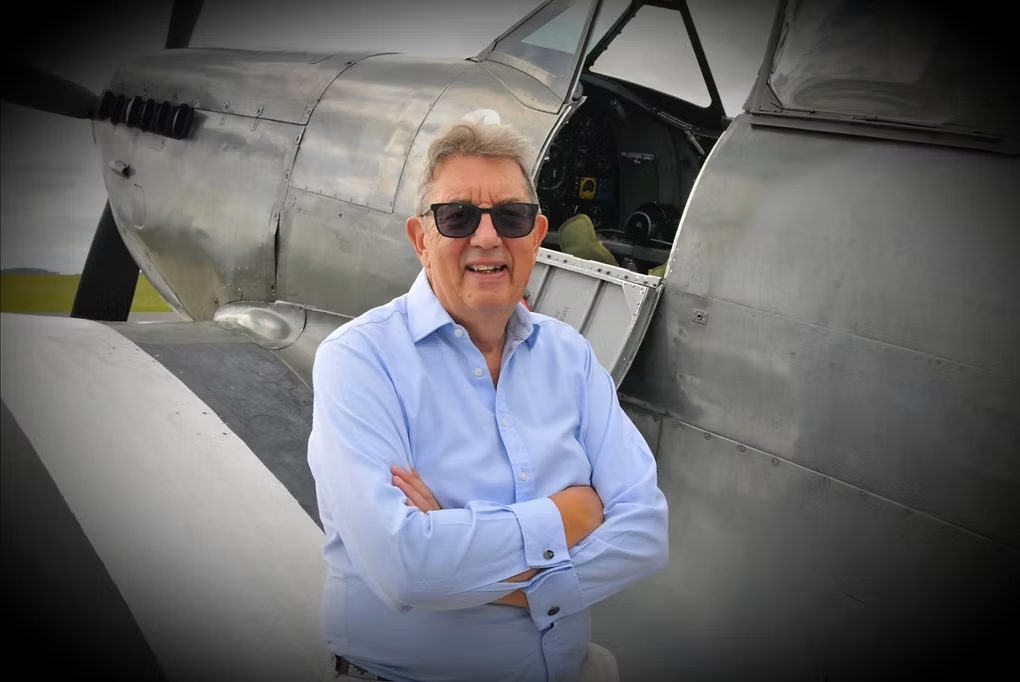
Col (Retd) Paul Beaver
VP of the Spitfire Society
Chair of the Aeronautical Heritage Special Group of the Royal Aeronautical Society
Author of Spitfire Evolution and Spitfire People
The Supermarine S5r combines ambition, history, and technology into one aeronautical heritage project. In the post-COVID world, it is exactly this sort of vision that is necessary to help pass the STEM learning of previous generations to new craftsmen and women who can safeguard the nation's aviation skills for the future..
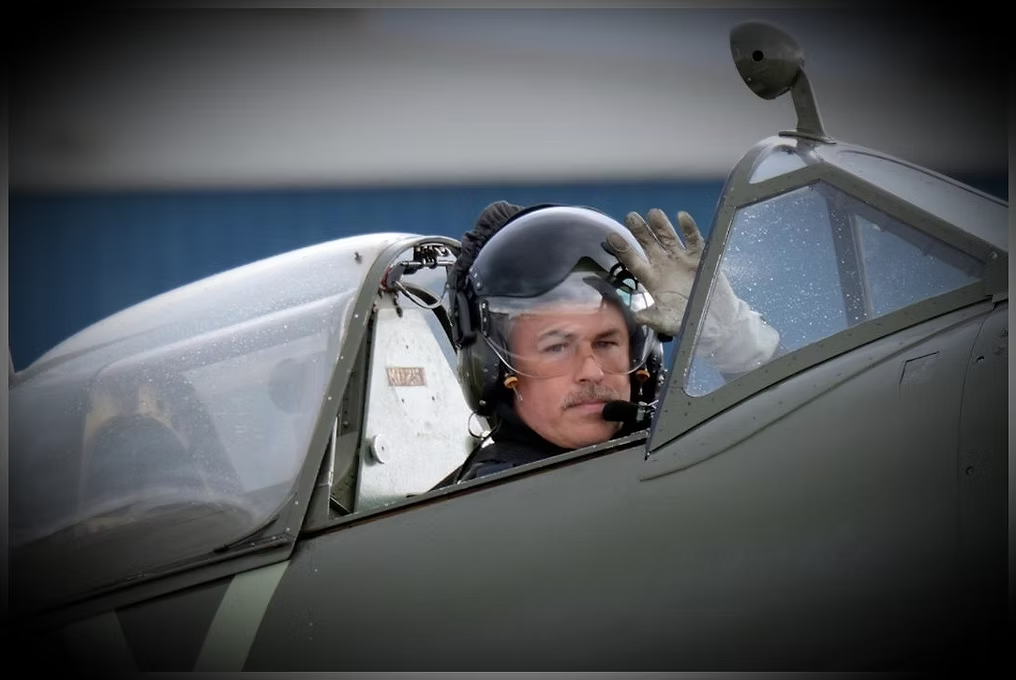
Dan Griffith
Military & Civil LAA Test Pilot
The Supermarine S5, Schneider trophy Seaplane, was a monumental undertaking at the time and perhaps in the end shaped all of our destinies. By being part of the historical design activities that ultimately led to the Spitfire, that defended our country during the Battle of Britain.
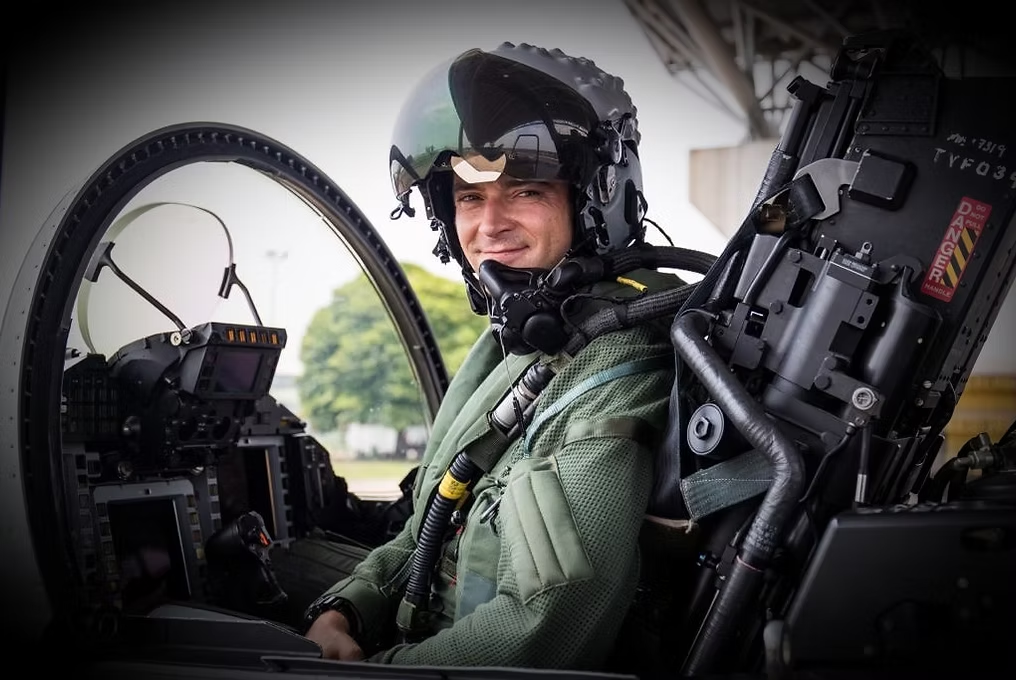
Sqn Ldr Roger A Cruickshank
DFC CFS RAF OLY
Military Pilot
With a huge lust for all things aviation, I was enamored by the possibility of a Supermarine S5 blessing our skies once again. The Supermarine Seaplane charity is striving to reproduce one of these fine aircraft, and fly it in time to celebrate the centenary of the S5’s Schneider win in 2027. As one of the front-running racing aircraft, that led to the design of the Spitfire, this magnificent flying machine has a special place in any fighter pilot’s heart, and I commend all the passionate people involved in this exciting project. .