THE SCHNEIDER RULES
Core Schneider Trophy Rules (as originally defined)
Written by Mark Blois-Brooke
The Schneider Trophy’s rules were intentionally designed to encourage rapid technological advancement. While formal rule changes were few, enforcement tightened over time, and competitive pressures drove major innovations in aircraft design. Britain’s final victory in 1931 marked the end of one of aviation’s most influential competitions.
These
rules remained the backbone of the competition throughout 1913–1931.
Aircraft must be seaworthy — they had to float for six hours and travel about 550 yards (503 m) on water.
Mandatory water contacts — twice during the race, aircraft had to land on or “come in contact” with the water. A fast bounce was allowed. If floats took on water, the aircraft had to continue with the added weight.
Course length — initially 280 km (170 miles), later extended to 350 km (220 miles).
Race format — time‑trial style; aircraft launched individually at 15‑minute intervals.
Entry limits — each national aero club could enter up to three competitors plus three alternates.
Hosting rule — the country that won the previous race hosted the next one.
Permanent trophy rule — any nation winning three consecutive races kept the trophy permanently. Britain achieved this in 1931.
Supervision — races were overseen by the Fédération Aéronautique Internationale (FAI).
Year‑by‑Year Breakdown (1913–1931)
Below
is every year the race was scheduled, including rule changes,
enforcement changes, and notable regulatory decisions.
1913 — Monaco (First race)
• Course: 6.4‑mile triangular circuit, repeated for 150+ miles.
• Enforcement: Strict interpretation of finish rules — Maurice Prévost was disqualified for taxiing the final 500 yards instead of flying over the finish line.
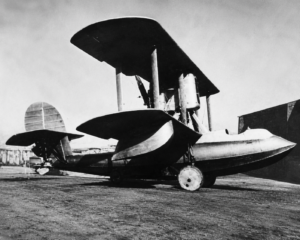
• Aircraft: Landplanes with temporary floats were allowed (this changed later as purpose‑built seaplanes emerged).
Rule change:
• First enforcement of “must fly over finish line” — clarified for future races.
1914 — Monaco
• Rules largely unchanged.
• UK’s Sopwith Tabloid won.
Rule change:
• No major rule changes recorded; enforcement consistent with 1913..
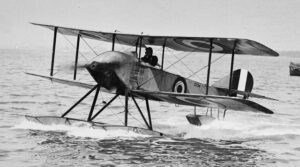
1919 — Bournemouth (Declared void)
• Italy’s Guido Janello recorded the fastest time but was disqualified for flying inside a marker pylon.
• Because he was the only finisher, Italy still hosted the next race.
Rule change:
• Clarification of pylon‑cutting disqualification — stricter enforcement of course boundaries.
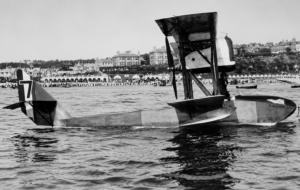
1920 — Venice
• Italian Savoia S.12 won.
• No major rule changes documented.
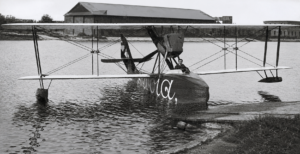
1921 — Venice
• Italians won again with Macchi M.7.
• No major rule changes documented.

1922 — Naples
• Britain broke Italy’s winning streak with Supermarine Sea Lion II.
• Course length now generally standardized around 280–350 km (per overarching rules).
Rule change: • Increasing emphasis on purpose‑built racing seaplanes — not a formal rule, but a de facto shift in competition standards.